Rethinking Plastics News

Aoede Creates Beautiful New Song About Plastic Pollution

Posted on February 16th, 2010  8:47 am

Aoede Blue Gold song about plastic pollutionBlue Gold

Listen to Blue Gold

Written by: Lisa Sniderman/Aoede

It starts with a flick
flick a lit stick
stick is thrown down
down to the ground
washed away, washed away
Out of sight, out of mind

It starts with a bag
Un-degradable bag
Bag is blown down
down to the ground
washed away, washed away
Out of sight, out of mind

So tell me, does it all come down to you
And tell me, tell me,
What can we do
to keep you free to be

Blue gold it’s your time to shi-ine
Blue gold nature’s swell design
Blue gold it’s your time to rise-
And high time we realize

Soiled six-pack rings
rings bob and sink
some seagull’s caught
caught like some drink
Far away, far away
Out of sight, out of mind

Red, orange and blue
Blue plastic stew
Birds bite and chew
Chew this strange brew
Far away, far away
Out of sight, out of mind

So tell me, does it all come down to you
And tell me, tell me
What can we do
Are we too blind to see

Blue gold it’s your time to shi-ine
Blue gold nature’s swell design
Blue gold it’s your time

You ebb and you flow
You’re high then you’re low
You crash and you curl
You’re an ever-changing world

You ebb and you flow
You’re high then you’re low
You gleam and you glide
Take me for a ride-on your

Blue gold it’s your time to shi-ine
Blue gold nature’s swell design
Blue gold till the end of time
Blue gold nothing more divine
Blue gold it’s your time to rise…
and high time we realize…

It starts with a wave-
A new wave of change

Press release

Blue Gold is currently being featured at :
Oikonos:  and Oikonos Education

Coastal Commission Coastal Cleanup Day: (to add this song to your myspace page, click the +)

Aoede/Lisa Sniderman June 2009
Vocals, Backing Vocals,
Acoustic Guitar: Lisa Sniderman
Electric Guitar: Peter Dominguez
Bass: David Sands
Drums, Percussion: Randy Burk

Written by BethTerry on February 16th, 2010 in Rethinking Plastics News

Tagged with , , ,

no comments

Take Your Canvas Bags!

Posted on February 12th, 2010  5:13 pm

Warning:  This music video and its message could be habit-forming.

Written by BethTerry on February 12th, 2010 in Rethinking Plastics News

Tagged with , , , ,

no comments

How much trash do you make?

Posted on February 4th, 2010  1:03 pm

This morning I got an e-mail from Dan Jacobson, Legislative Director of Environment California.  Dan’s group helped raise a public outcry when the Governor wanted to close all our State parks for budgetary purposes.  His group also published an important report on Toxic Baby Bottles, showing that five major brands of plastic baby bottle leached the neurotoxin BPA into infants’ milk.   

Dr. Mercola shares this picture of a baby with a polycarbonate bottle. The WHO recommends breastfeeding of babies for the first two years of life. Do we need to be using so many bottles?

 So, when Dan asked for my input on a survey, how could I refuse?  My response is below.  You can respond, too:  http://www.environmentcalifornia.org/action/oceans/member-survey?id4=ES

 
One of the real heroes of waste reduction these days is Beth Terry (www.fakeplasticfish.com).   You can see what Beth  is doing every day to reduce her trash footprint by watching her 5-minute video on her 2009 plastic trash (total under 4 pounds). 

Beth says, "my new collected plastic for the year comes in at 3.7 pounds," about 2% of the average American's trash.

 Here’s the survey from Environment California, and my replies:


What are some everyday things you do to cut your use of plastic and other trash that might end up in the Pacific?   

I eschew plastic at every opportunity!  I never buy any beverage, oil, cosmetic, or herbal product in a plastic container.  (Plastic lids, however, have become impossible to avoid, even on some glass jars.)    

My friends at Marin Farmers' Markets are really into reusable container of all sorts!

 I buy milk in glass bottles, bread in paper bags (yummy artisan bread), grains in bulk.  I make my own yogurt, too — much easier than I ever imagined.    

 I never use bottles like these! 

What are the most interesting and creative things you do to cut waste? 

 I tally the number of times that we take the trash bin to the curb for pick-up each month.  On a good month, we’re at one pick-up or less.

Today I’m starting Beth Terry’s plastic challenge — capturing every piece of plastic that I am about to throw away or recycle, and keeping it in a bin (I’ll wash food-stained pieces before storing!).  At the end of 12 months, I’ll make a tally and weigh it all.

 What are some common barriers you’ve experienced to maintaining a small trash footprint? 

Packaging is the number one item:  styrofoam cushioning in boxes, hard plastic casing around small office purchases, plastic bags around newspapers even when it’s not raining; non-recyclable, non-compostable milk cartons. 

All this junk. Ugh!


The second issue is the difficulty in repairing or recycling items that break or malfunction.  For example:  flashlights, mugs, school binders, tools. 

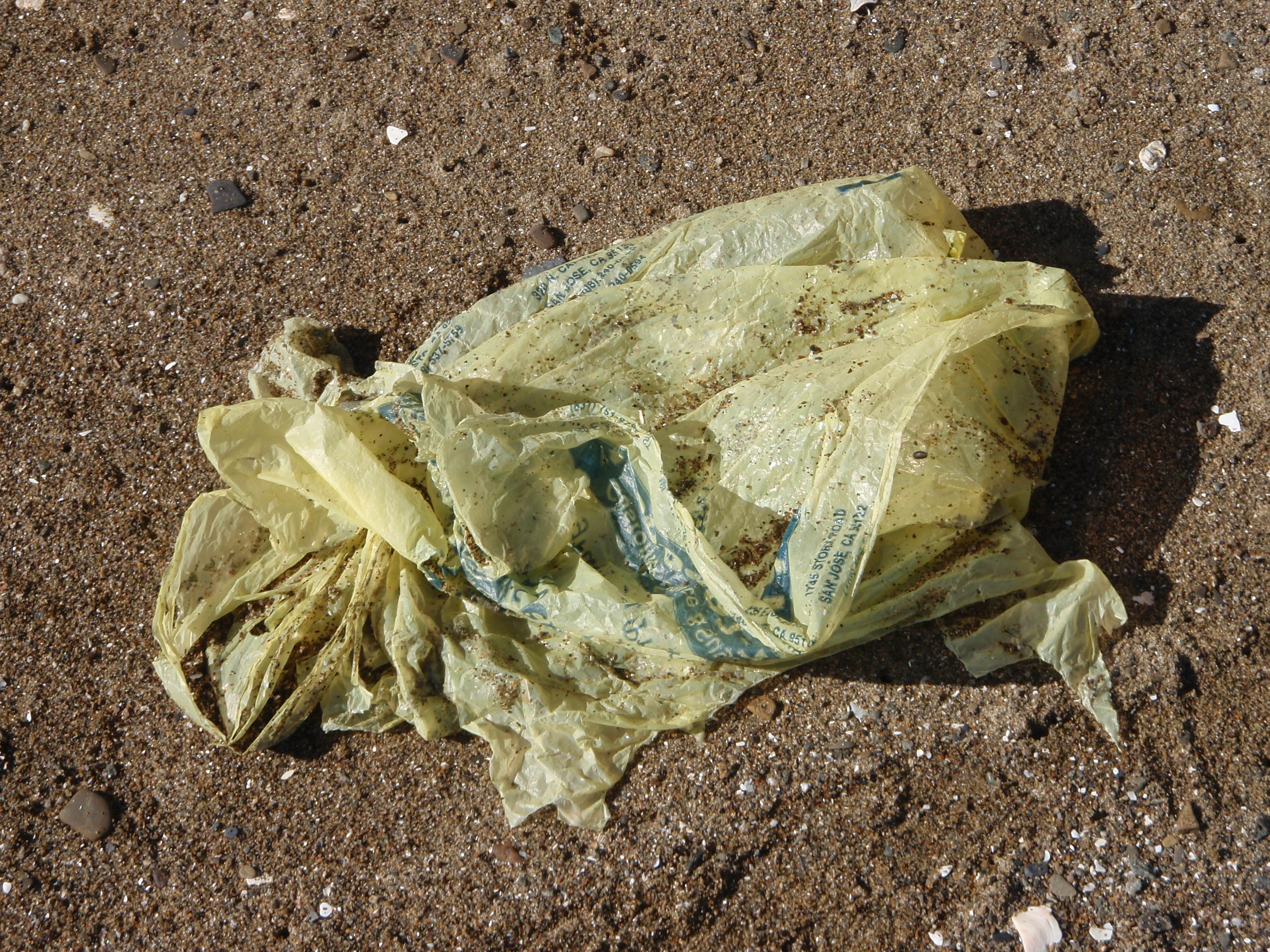
What are some ways you help reduce trash at your work, school, church or community center? I have always tried to leave little trash behind.  After a month taking care of a friend’s house in 1996, I had only one small paper bag of garbage to put on the curb (I put it in my neighbor’s garbage can instead).  In 2004 I joined Green Sangha, a group dedicated to helping individuals live more consciously and harmoniously.  The next year, I co-founded Green Sangha’s Rethinking Plastics campaign.  We have given over 200 talks in the community, educated business owners and employees, consulted with schools on waste reduction, and advocated for civic change.  We helped pass the plastic bag ban in Fairfax, and are collaborating with EcoMom Alliance, iReuse.com, Teens Turning Green, and the County of Marin on the BYOBag Marin campaign. I’m also working with our local middle school, Davidson in San Rafael, on an End to Litter.  Too often, we see things like this bag lying on the ground:   

 What information would make it easier for you and the groups you are part of to cut waste? An itemized list or chart of the costs of throw-away items, in terms of energy expenditure, materials wasted, extraction (mining, logging, drilling), and toxicity, along with the less measurable dimension of non-biodegradability.  Then, a comparison to reusable items of various sorts (sustainable vs. synthetic, for example).

Written by stuart on February 4th, 2010 in Rethinking Plastics News

Tagged with , ,

2 comments

Bring Your Own Bag Day

Posted on November 15th, 2009  12:25 pm

More trash still 8-09

Have you ever felt depressed by all the bags that people use, day after day, and how many of them get loose in the environment?  Plastic bags are high-count items each year in the California Coastal Cleanup.  We’ve all all seen bags littering our parks and blown up against highway fencing.

Redwood Landfill, the final resting place for garbage from Marin and Sonoma Counties, has an employee dedicated full-time simply to patroling the property and recovering plastic bags and other plastic packaging that has gotten loose!

The average Californian, according to the Integrated Waste Management Board, throws away about 552 plastic bags a year.  This may seem like a small number — less than 2 a day — but when you add up the numbers that we all use together, the amount is overwhelming:  19 billion plastic bags per year in California, or 600 bags per second.

Shopping cart

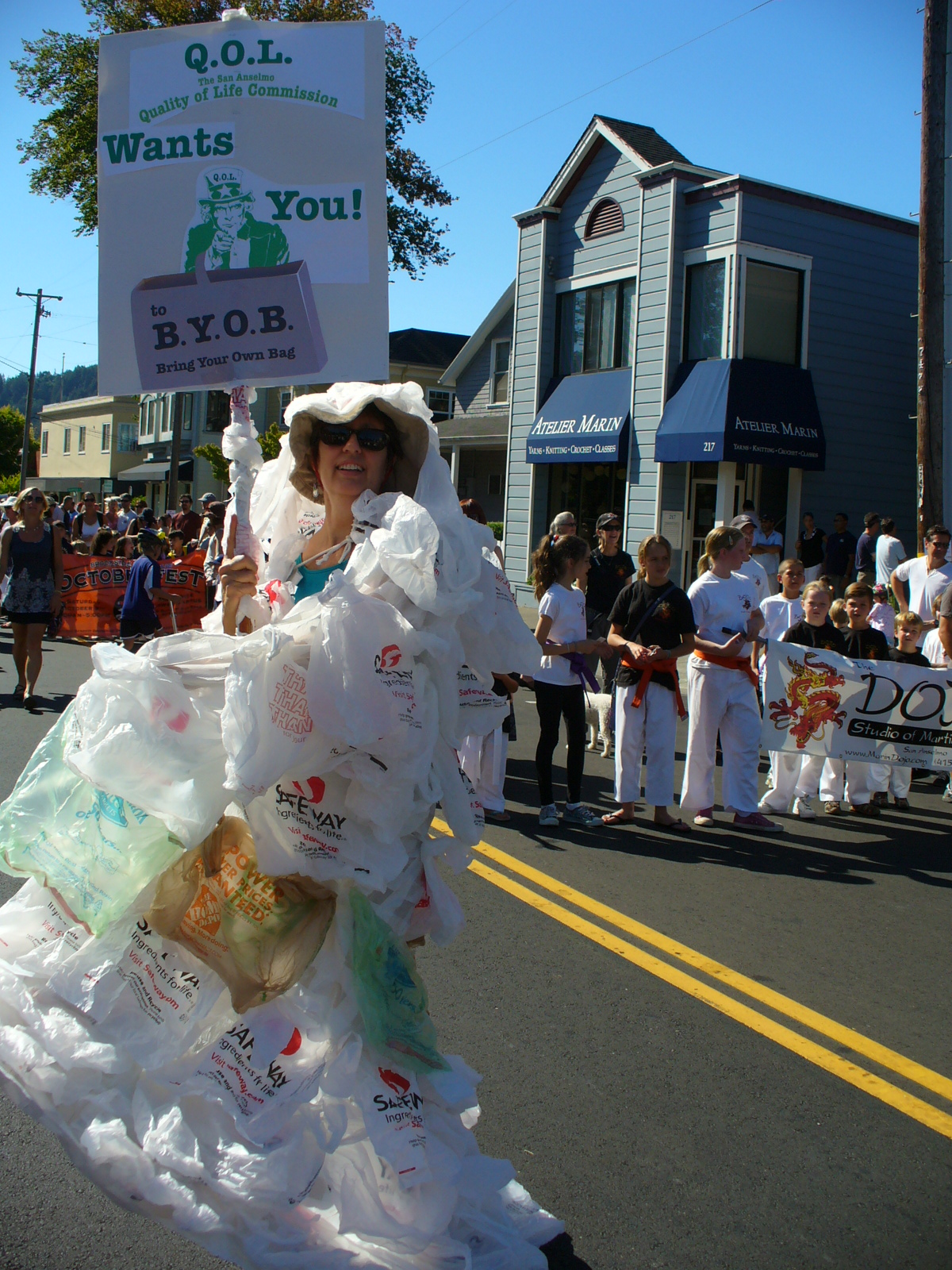
But you may also have wondered, “What good is it for me alone to stop throwing away bags?”  The answer is:  it’s a good start, and let’s get everyone else involved.  That’s what Bring Your Own Bag Day is about, on Saturday, December 19, 2009. 

What is BRING YOUR OWN BAG DAY? 

It’s a joint project of the County of Marin, EcoMom Alliance, Green Sangha, iReuse.com, and Teens Turning Green, in conjunction with Day Without a Bag, an action by Heal the Bay, Earth Resource Foundation, Surfrider Foundation, and others.

It’s a day dedicated to raising community awareness and showing how we all can reduce waste, clean up our streets and parks, and eliminate toxic inputs from our lives – simply by bringing our own bags.

What’s the goal? 

  • Stores will measurably reduce the number of bags they give away on Saturday, December 19. 
  • Customers will develop the habit of bringing their own reusable bags instead of counting on costly, environmentally-polluting single-use bags. 
  • Eventually, we will see elimination of free bags every day of the year – saving stores money and conserving precious resources.

Tote Bag

How can stores and markets get involved? 

Participating businesses can:

  • Proclaim BYOB Day through signs outside stores, displays at check-out counters, in-house newsletter messages, PA announcements, and checker scripts.  Green Sangha has provided sample text and scripts, and a customized message that Safeway will broadcast in all their Marin County stores is copied below.
  • Make reusable bags available and prominently displayed at their check-out counters.  In Marin County, the JPA on Hazardous and Solid Waste has already given away 10,000 canvas tote bags.  They will donate even more on Saturday.
  • Give a generous credit for each reusable bag a customer brings (10-15 cents); add a surcharge on all non-reusable bags that the store dispenses (we suggest a minimum of 25 cents, to catch customers’ attention and reinforce the point).
  • Join our working group of businesses, civic officials, and eco-activists to work on the proposed county ordinance to ban single-use shopping bags and to make BYOBag a daily reality.

Participating stores in Marin County include:  Delano’s, Good Earth, J. Crew, Marin Farmers’ Markets, Mill Valley Farmers’ Market, Mill Valley Market, Mollie Stone’s, Nordstrom, Palace Market, Safeway, Whole Foods, Woodlands Market.  Municipalities that have issued official proclamations include the County of Marin, City of San Rafael, and the Town of San Anselmo. 

Here’s what Safeway is putting on their loudspeaker announcement in every Marin County store on Saturday: 

Good Morning Safeway Shoppers…just a reminder that today (Saturday) is Bring Your Own Bag Day – a special community project brought to you by the County of Marin and a number of other local nonprofits.  Safeway is proud to be participating in this event and we will be giving away one free reusable bag to our first 250 customers today!  We are doing this at all of our stores in Marin County. 

“It’s also a good opportunity to remind you that Safeway does sell re-useable bags and we have a number of types to choose from. Come take a look at our checkout counter and complement your purchases today by buying a few additional re-useable bags.”


Reusable bags save everyone money, and conserve natural resources.  They're often easier to use, too!

Reusable bags save everyone money, and conserve natural resources. They're often easier to use, too!


Written by stuart on November 15th, 2009 in Rethinking Plastics News

Tagged with ,

2 comments

PVC — More Reasons to Leave it Alone

Posted on August 14th, 2009  3:03 pm

Last week, I wrote about PVC and the CHEJ guide to a PVC-free lunchbox. Beth Terry, who writes for the blog www.fakeplasticfish.com, also recorded her thoughts, all reprinted below. I think you’ll find them worth reading.

Tuesday, August 4, 2009
New Guide to PVC-Free School Supplies

The Center for Health, Environment, & Justice has released its Back-to-School Guide to PVC-Free School Supplies today. It’s a free downloadable guide to all the products kids might need for school, from binders and notebooks to clothes, electronics, lunch boxes, and a host of other products. It includes a comprehensive guide to suppliers as well as general rules to keep in mind.

So what’s wrong with PVC?

I’ve ranted about PVC products quite often on this blog, but in case you missed those posts, here’s a quick summary:

1. PVC is the only major plastic that contains chlorine, so it is unique in the hazards it creates. During production, PVC plants can release dioxins which harm workers and community members who live nearby. According to pvcinformation.org, residents of Louisiana, which is home to half the PVC production facilities in the USA, have been shown to have much higher concentrations of dioxins in their blood than the average U.S. citizen.

2. The plasticizers used to make PVC soft contain endocrine-disrupting phthalates which can leach from the plastic, especially when used in children’s toys and other products that may find their way into children’s mouths. A German study just released July 27, 2009 in the journal Pediatrics suggests that the use of intravenous feeding bags that contain the common phthalate DEHP might increase the risk of liver problems in premature babies. In fact, many hospitals have replaced the PVC tubing and IV and blood bags they use with less toxic alternatives.

3. Lead is used to stabilize PVC. According to Jennifer Taggart (The Smart Mama) in her comment yesterday about my PVC binders, PVC can also contain lead or cadmium. If the PVC is stabilized with lead, the lead is available for pickup at the surface – and can then be transferred by the hand to the mouth. In other words, lead can be ingested from a PVC lead-stabilized binder without mouthing. Lead doesn’t like being in the plastic matrix, so it migrates to the surface, particularly when exposed to heat and/or friction. Older PVC will have higher concentrations of lead. Having tested lots of binders now with my XRF, there is a substantial percentage that do have lead, but not all.

4. PVC is hard to recycle. According to ecocycle.org, because so many different additives are used to make PVC, recycling the plastic is extremely difficult, and any PVC bottles (#3 plastic) that make it into the recycling stream can contaminate and ruin a whole load of #1 bottles.

5. When incinerated, PVC forms dioxins, a highly toxic group of chemicals that build up in the food chain. When landfilled, PVC poses significant long-term environmental threats as chemical additives can leach into groundwater.

6. PVC gives off noxious gases in a fire. Greenpeace says that in a house fire, fire-retardant PVC will smolder for long periods of time rather than burn, “giving off hydrogen chloride gas long before visible signs of fire appear. Hydrogen chloride gas is a corrosive, highly toxic gas that can cause skin burns and severe long-term respiratory damage.” For this reason, the International Association of Firefighters is one of several organizations calling for a phase-out of PVC.

7. For much more information about the hazards of PVC and why we should avoid it, please check out CHEJ’s web site, PVC: The Poison Plastic.

And by the way, the drawing for plastic-free school supplies is still open and Sustainable Group has offered to donate three Back-to-School Kits! If the above information has caused you to rethink using those old PVC binders, feel free to leave a comment and enter the give-away. It will be open for at least another week. [Click here to go to this post on her website.]

Like I stated in that post, I generally believe that reusing the products we already have is the greener choice. But in the case of PVC, I’d rather encourage the development and manufacture of safer alternatives and send the existing PVC to the hazardous waste facility.

This post is part of Beth’s contribution to August’s Green Moms’ Back to School Carnival hosted by Organicmania.

Written by stuart on August 14th, 2009 in Rethinking Plastics News

Tagged with

1 comment

Vinyl for Lunch?

Posted on August 5th, 2009  2:22 pm

Do you remember when lunch boxes were made of metal, or you simply carried your lunch in a paper bag? These days, kids everywhere seem to be carrying their lunches in plastic. Plastic lunchboxes are colorful, lightweight, and don’t rust.

Some plastic lunchboxes close tightly, making sure no liquid leaks out.

They come in all sizes, too, so you can customize the container for your child’s (or your own) needs on any particular day.

So why aren’t we celebrating? One word: plastic. Plastic lunchboxes are reusable, of course, but reducing waste is not the only issue when it comes to reducing plastic pollution.

The Center for Health, Environment, and Justice (CHEJ) just released their “Back-to-School Guide to PVC-Free School Supplies”: http://www.chej.org/publications/PVCGuide/PVCFree.pdf.
They point out that many of our children’s supplies, including backpacks and binders as well as lunchboxes, are made out of PVC (polyvinyl chloride). CHEJ calls PVC “the poison plastic” because it’s toxic in manufacture, in use, and in disposal.

Here’s what they have to say: “Cancer-causing chemicals that contaminate the air and water of surrounding communities are used to produce PVC. When PVC is manufactured or burned, numerous dioxins are formed and released. Dioxins are a highly toxic group of chemicals that can cause cancer, and harm the immune and reproductive systems. These and other toxic chemicals released during the PVC lifecycle contaminate our bodies and may pose irreversible life-long health threats.”


They go on: “PVC is unique among plastics because it contains dangerous chemical additives. These harmful chemicals include phthalates, lead, cadmium, and/or organotins, which can be toxic to your child’s health. What’s worse is the danger these chemicals pose — phthalates and other toxic additives can leach out or evaporate into the air over time posing unnecessary dangers to children. Over 90% of all phthalates are used to soften or plasticize PVC products.”

Wow! We’re making children’s daily articles out of materials that can leach harmful chemicals into the air or children’s food? Suddenly those brightly colored lunchboxes don’t look so cheery.

Like the smiling face of a character selling fast food (concealing the attendant high calorie count, low nutritional value, and agricultural pollution), the characters, motifs, and logos on our children’s articles begin to look less wholesome.

What can we use instead? The first and last technology will always be inspired human thinking. If we use our heads and our hands, we will surely come up with alternatives that are safe. But if you’re having trouble coming up with ideas in time for the new school year, do read CHEJ’s report: http://www.chej.org/publications/PVCGuide/PVCFree.pdf. It’s 13 well-written pages, with more background on PVC, and suggestions we could all use.

Here’s to a plastic-free world!

Picture credits:
1. made-in-china.com
2. abcpack.co.nz
3. chinahuayu.cn
4. greatgiftsandtoys.com
5. Amelia Spilger, Marin Farmers’ Market, www.MarinFarmersMarkets.org

Written by stuart on August 5th, 2009 in Rethinking Plastics News

Tagged with

no comments

Gardening Our Way To Paradise

Posted on July 13th, 2009  12:00 pm

Rethinking plastics leads us back to our source of sustenance — a harmonious relationship with mother earth — and gardening is a doorway into that harmony. For this reason, I have been continually refreshed by my association with the Green Schoolyard program at Davidson Middle School in San Rafael, where my stepson went to school.

The aim of the program is to create a Garden where students can learn about the natural world, nurture living things, and reap the earth’s bounty. Although the Garden began within a circumscribed space, we find the boundaries transparent and often illusory. The Garden keeps slowly expanding into surrounding areas as we remove invasive weeds on the outskirts and infuse an ever richer variety of herbs, flowers, and shrubs.

The last school year, 2008-09, was especially busy and fruitful. The year ended with a climax when the 8th grade class donated $500 toward the purchase of fruit trees to go behind the Woodshop in a long-wished-for Haven.

If you have ever stopped by Davidson, you may recall how weed-infested the entry had been, even one year ago:

Then, the Davidson Dads organized a major overhaul, including upgrading and making more water-efficient the irrigation system, and installling a lawn by the office. The Conservation Corps joined in with great energy:

The smiles on their faces indicate the satisfaction they felt by making such a difference in the appearance of the school’s entry:

Classes in the Garden

* After occasional visits to the Garden in the fall, 6th grade science classes had a series of lessons this spring led by Next Generation garden educator Marijanna Shurtz. Teachers Bob Olson-Brown and Therese Hopkins helped their students plant seeds in their classrooms; many of those seeds are now thriving in the Garden.

* Kimberly Pearson brought her 12 SDC students to the Garden all spring, as often as four days a week. They explored, planted, and tended the growing crops of spring.

* Josh Powell held drawing classes in the Garden to enliven his students’ palette of possibilities.

* Laura Edelen shared Poetry in the Garden with her 6th grade Core classes. This is the third year in which the Garden has been used as a place of poetic inspiration.

Habitat Restoration

The Conservation Corps has cut great swaths of broom, fennel, and cottoneaster out of the Side Garden/Riparian Zone. We have yet to subdue the English ivy and pampas grass. Now, the Bay Institute has taken interest in our Riparian Zone, and has proposed a grant to complete the removal of invasives, plant native shrubs and trees (including some to shade the Band Room, reducing energy costs and carbon emissions), and possibly even restore stream flow by re-connecting to the original slough. Whatever measure of these dreams we realize, we’ll see a visible improvement to the look of this still too-desolate area of campus:

Litter

The proliferation of plastic litter on campus — by students, sports groups, and passersby — is the antithesis of everything the Garden is about. This year a team of students, parents, and staff worked together to move the campus closer to Zero Litter and Zero Waste. On October 10, Algalita Marine researchers Anna Cummins and Marcus Eriksen spoke to the assembled student body and showed pictures, videos, and actual relics from their travels across the Pacific Ocean to Hawaii. One of their exhibits consisted of plastic particles pulled out of the ocean by a surface trawl, just like the ones being shown by Algalita captain Charles Moore to our Governor and his wife:

Conservative estimates in 2003 put the amount of plastic trash floating in the North Pacific Gyre at 3 million tons. Eighty percent of that litter comes from land-based sources. Anna and Marcus made that point vivid for our students. To follow up, this spring the DMS Science department hosted the San Rafael Clean slide show on How Litter Hurts in every science classroom. The students saw images of the growing mountains of plastic trash that are invading our soil and water.

They learned, too, about the devastating effect of this litter on wildlife, such as the entanglement and starvation of an estimated one million seabirds every year.

I was impressed by how many students seemed to resonate with the message of reducing litter and reducing waste. Two boys came up after one presentation to describe how they had personally helped extract wildlife — one, a seabird, the other, a baby seal — from plastic tangles.

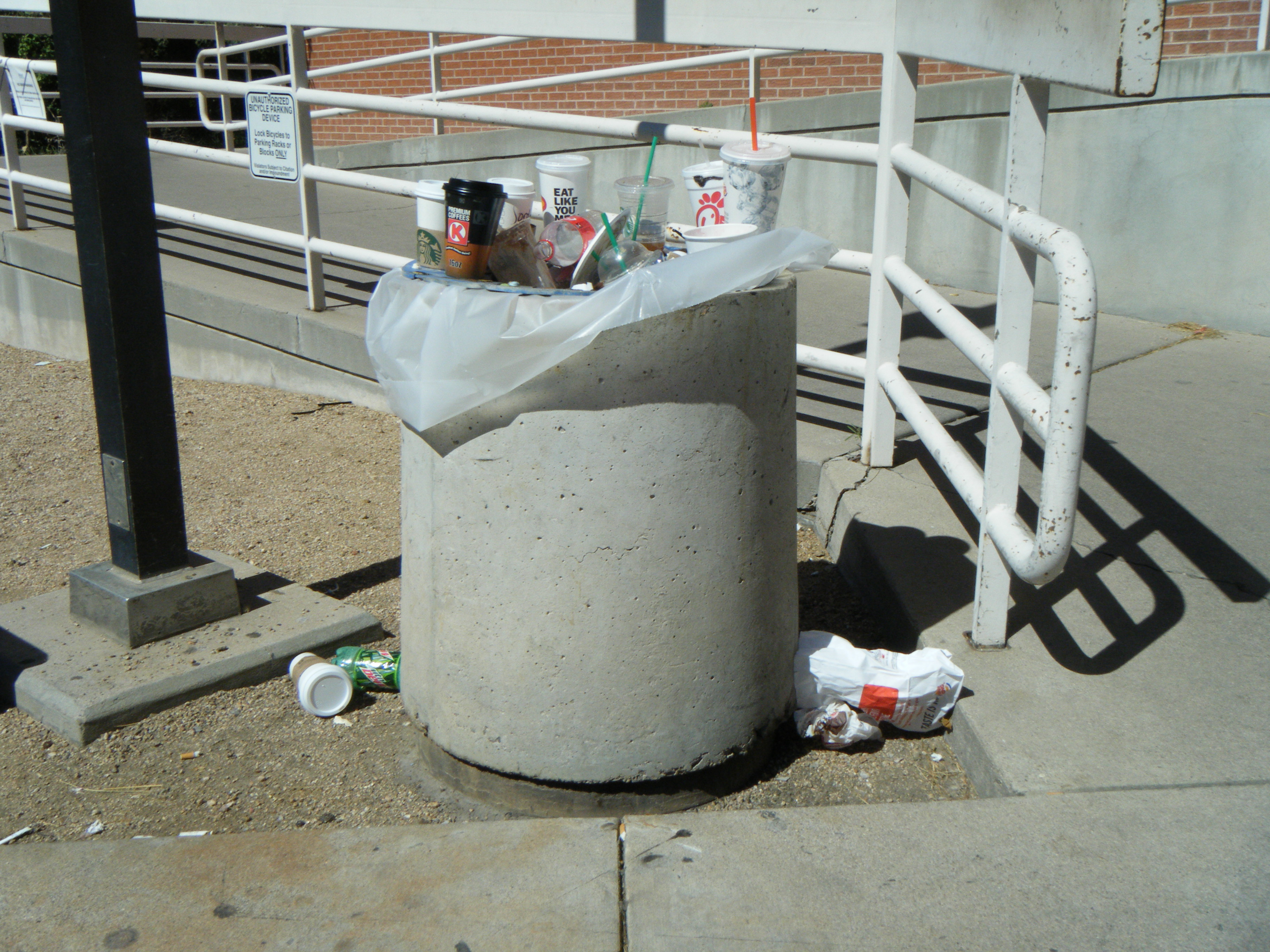
We are not done with this project, but progress has been made. When I showed pictures of Davidson litter spots from Sep 06, such as the one below, very few of the students said they had seen it look that trashed this year.

We were especially fortunate to have Claire Brosnan, Sami Mericle, and Linnea Schurig as student representatives on the Committee to End Litter. We will miss them next year, but know that they will continue their work in community improvement at San Rafael High.

Enrichment for the Garden-minded

Two films came to my family’s attention this summer. Each tells a vivid tale of our relationship with nature and ourselves:
1. Food, Inc. Cinematically gorgeous, this film shows how industrialized agriculture has overtaken our economy, and the high costs we are paying for “cheap” food. The film will confirm every gardener’s instinct that you have, and may spur even further rethinking of your purchasing habits. You may also be inspired to start saving your bean seeds for the next year’s planting.
2. A Man Named Pearl. An unlikely title for an equally unlikely topic, topiary! This film chronicles the dedication of a man who, by transforming his property with breathtaking topiary, created a place of unusual beauty, improved racial relations in his southern town, and became an inspirational figure to young and old. We rented this film from Netflix, and it’s likely available elsewhere.

Written by debra on July 13th, 2009 in Rethinking Plastics News

no comments

What a Drag!

Posted on July 12th, 2009  9:44 am

Last spring I received a call from Devi Peri, Education Coordinator for Marin Recycling. A customer wanted some information on plastics. How much does the average American throw away every year?

This sounded like an easy enough question, but where does one begin to find the answer? We all have a rough sense that there’s a lot of plastic out there in the world. We see it in too many places. Here’s an extreme concentration of plastic, in the Citarum River:

Fortunately, I remembered that the EPA publishes a report every two years on Municipal Solid Waste (MSW), the stuff that we use and throw away. “These materials,” according to the EPA, “range from packaging, food scraps, and grass clippings, to old sofas, computers, tires, and refrigerators.” (MSW does not include industrial, hazardous, or construction waste.) In 2005, the average American threw away 4.5 pounds of MSW every day, a rate which has held nearly constant since the 1990’s. In 2007, that rate rose slightly to 4.6 pounds per day. (We recycle or compost about 1.5 pounds of that total daily.)

Doing some math with other tables in the EPA report for 2005 (Municipal Solid Waste Generation, Recycling, and Disposal in the United States: Facts and Figures) and referring to the US Census, I came up with an estimate of 186 pounds per person per year thrown away, not recycled.

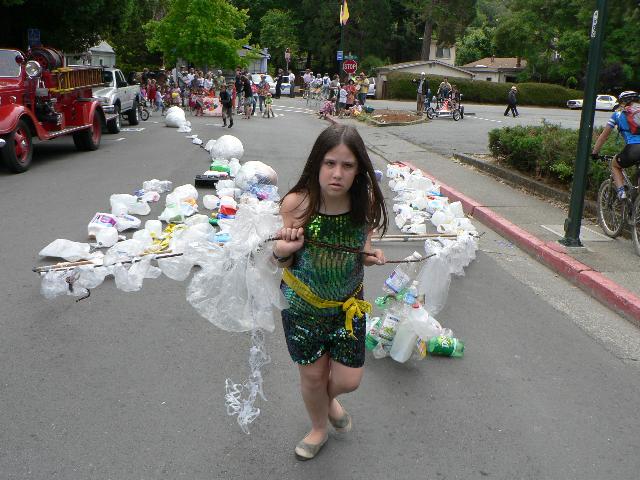
Armed with this information, Devi’s caller, a man named Sierra Salin, constructed a costume for the Fairfax Festival Parade. It was really a kind of anti-float: about 90 pounds of plastic, representing the weight of what the average American throws away in half a year, which he then dragged behind him for the length of the parade (about half a mile). Here’s what he looked like:

This year, Sierra went at it again, picking up waste plastic at Marin Sanitary Service (the parent organization of Marin Recycling):

After the parade, his daughter wanted to try hauling the costume, or display, or whatever it was. The expression on her face says a lot about the dismay that we feel in our heart of hearts as we watch the growing load of plastic in the world:

Joanna Macy reminds us that we need to embrace the grief that we feel when we bear witness to the suffering of the world. Having done so, she says, we can move on to constructive action. Sierra and his daughter have not only embraced the grief, they have dragged it in full public view. May we all wake up and take constructive action soon!

Written by stuart on July 12th, 2009 in Rethinking Plastics News

Tagged with ,

no comments

Message from the Sea

Posted on June 2nd, 2009  8:55 am

Litter has been with us since the dawn of time. But with the dawning of the age of non-biodegradable synthetics, and the profusion of these materials in single-use, disposable products, litter has taken on enormous proportions. We’re just beginning to consider the consequences.

On Tuesday, May 26, Green Sangha co-sponsored a presentation by Algalita Marine Researchers Anna Cummins and Marcus Eriksen, to help us visualize those consequences. The speakers described the voyage of the “Junk,” a plastic-bottle boat that sailed from Long Beach to Hawaii in the summer of 2008. They showed us pictures and videos, displayed items found on their ocean travels, and told the story of their journeys into the North Pacific Gyre, where plastics that outweigh zooplankton are entering the food chain and disrupting life’s essential processes.

On that same Tuesday, Richard James, a West Marin photographer and environmentalist, had his own journey on the coast at Pt. Reyes. He captured his work in a set of stunning photographs, such as this one below. (You can see more of his pictures at the bottom of this article.)

Whether we see the debris littering our shore, or peer at jars full of plastic confetti recovered in ocean trawls, the invasion of plastics into our ecosystem is inescapable.

While we are all struck by Algalita’s initial 1999 finding of a 6:1 ratio of plastics to zooplankton in the North Pacific Gyre (cited even as recently as Moore’s 2008 paper in Environmental Research), Anna & Marcus pointed out that zooplankton concentrations vary widely by season and time of day. A more reliable benchmark, they said, is the concentration of plastic particles per unit of surface area. In 1999, they found .002 gm/m2. In 2008, the concentration had doubled to .004 gm.

They reported on their visit to Kamilo Beach in Hawaii, where the plastic trash can go up to your knees. And this was three months after the beach had been cleaned of all litter. Scooping into the beach at the high tide line, they found more plastic particles than sand.

They spoke also of Midway Island, about the size of a college campus. They found hundreds of Laysan albatross carcasses with plastic pouring out of their abdomens. They cited the finding of Laist (1997) that 44% of the world’s seabirds species are susceptible to plastic ingestion or entanglement. In addition, 22 kinds of cetaceans, all marine turtles, and a growing list of fish are so affected.

They reminded us that 80% of ocean litter comes from the land. Even riding their bicycles through Oregon, considered one of the cleanest states, they could not travel more than 20 seconds before they saw another piece of roadside litter. (In the San Francisco Bay Area, the Regional Water Quality Control Board reports an average of 3 pieces of litter along every stream that feeds the Bay.) Whether we see the debris littering our shore, or peer at jars full of plastic confetti recovered in ocean trawls, the invasion of plastics into our ecosystem is inescapable. Amphipods, barnacles, benthic worms, jellyfish, salps, lugworms, and plankton have all been documented to ingest plastics in their surrounds.

The rainbow runner is a particularly telling example. Marcus found this fish on many Hawaiian restaurant menus. One rainbow runner that he caught while sailing to Hawaii had 12 pieces of plastic in its flesh. From a total of 671 samples of prey fish on their journey, 37% had visible plastic particles in them. “Our fish,” said Marcus, “are eating our garbage.” (And these are just the visible particles. A 2004 study of a market in Singapore found BPA, a building block of polycarbonate and a major endocrine disrupter, present in every sample of seafood.)

What can we do about this spreading plague of synthetic, non-biodegradable, often-toxic material? Recycling has been at the top of many people’s lists. Anna and Marcus, though, said that it should be at the bottom when it comes to plastic. Here’s why:
1. Recovery is inefficient.
2. Markets for recycled plastic are limited.
3. Plastics are easily contaminated by foodstuffs and other materials; types of resins are also easily confused in the high-speed sorting of materials at recycling centers.
4. Low melting points of plastics means that they must be washed instead of burned clean.
5. Down-cycling is the best that we can get out of plastics recovery.

Instead, they described a 3-point plan:
1) Ban throw-away design.
2) Require EPR for all durable goods.
3) Create an economic incentive for retrieval of all plastics loose in the environment, perhaps 25 cents per pound.

We might add to this list: 4) Institute the Precautionary Principle as a screen for all new chemical and manufacturing products and processes. Include a retroactive recovery and replacement program for all synthetics already on the market with proven endocrine-disrupting effect. This program would be paid for by fines on companies that produced these synthetics.

Many of us have already begun the process of change, diminishing our purchase of items made of, or wrapped in, plastic. We have spoken to friends and family, even encouraged and instituted zero-waste practices at office parties and school events. Others have hosted presentations on Rethinking Plastics. Others are tabling at Marin Farmers’ Markets to inform fellow customers about healthy alternatives to plastic. Some of us have written letters to legislators and spoken at public hearings.

What comes next? More education, more outreach, more advocacy. Here’s a sampling of opportunities:

EDUCATION
* Come to a screening of Addicted to Plastic, an entertaining and informative film, on Thursday, Sept 10, at the Rheem Theatre in Moraga. The event opens at 6 pm with wine and cheese tasting; the film starts at 7 pm.
* Join Cathy Rosekrans’ team of volunteers at the Civic Center Farmers’ Market the third Sunday of every month, where we educate customers on healthy alternatives to plastic; or come to the Oakland and Hayward markets on Saturdays. Contact Cathy at katerine2@earthlink.net.

OUTREACH
* Think of one business that is selling unnecessary plastic (e.g., plastic water bottles) and talk with us about how to inspire them to change.
* Contact us for names of businesses that we’ve already identified as good candidates to hear this message.
* Think of one wasteful plastic product (e.g., the new plastic labels on organic produce, or plastic net bags around cantaloupes), and brainstorm a campaign to replace this item with something clean and green. (In many cases, that replacement means nothing — a Zen option!)

ADVOCACY
* Write letters to legislators on bills pending in Sacramento this year: EPR (Extended Producer Responsibility), plastic bag fees, and a styrofoam ban. These have all been moved to the “two-year calendar,” meaning that they have been postponed for consideration till Jan 2010. It’s not too early to start reminding our legislators that we need this action.
* Speak to your city council about banning styrofoam and all throw-away petro-plastics such as straws, cups, and lids.
Green Sangha will be sending updates on opportunities periodically, but please let us know if you have ideas of your own or need support for follow-through. We will be offering the Rethinking Plastics training in September and October in Berkeley, preparing volunteers for speaking, for tabling at markets and other venues, for outreach to businesses, and for civic advocacy. We start Thursday, Sept 24. Each class goes from 7 to 9 pm. RSVP if you would like to participate!

In the meanwhile, know that many inspired activists are taking on the Herculean task of re-imagining our world, from one dominated by empire to one constructed of community. Join us as we build that community through meditation, education and support, and awakened action.

Stuart Moody
Rethinking Plastics Campaign Director

All Pt. Reyes beach litter photos on this post (first picture, and all below): Copyright Richard James, May 2009.

Written by stuart on June 2nd, 2009 in Rethinking Plastics News

Tagged with , ,

1 comment