Litter has been with us since the dawn of time. But with the dawning of the age of non-biodegradable synthetics, and the profusion of these materials in single-use, disposable products, litter has taken on enormous proportions. We’re just beginning to consider the consequences.
On Tuesday, May 26, Green Sangha co-sponsored a presentation by Algalita Marine Researchers Anna Cummins and Marcus Eriksen, to help us visualize those consequences. The speakers described the voyage of the “Junk,” a plastic-bottle boat that sailed from Long Beach to Hawaii in the summer of 2008. They showed us pictures and videos, displayed items found on their ocean travels, and told the story of their journeys into the North Pacific Gyre, where plastics that outweigh zooplankton are entering the food chain and disrupting life’s essential processes.
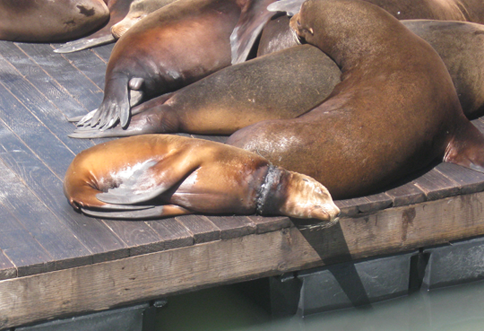
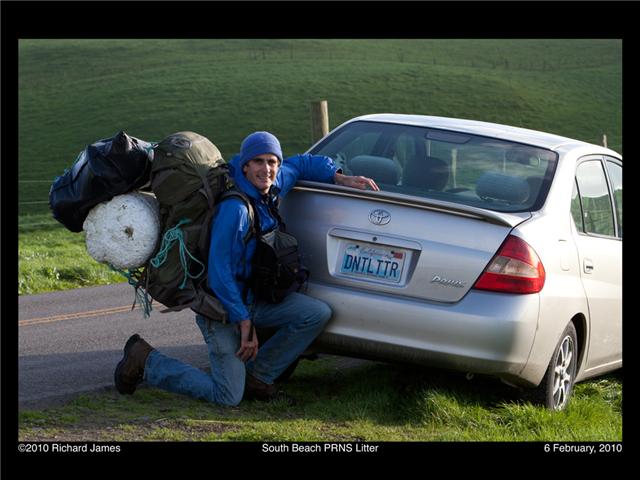
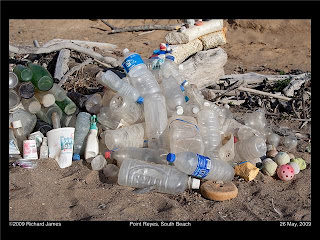
On that same Tuesday, Richard James, a West Marin photographer and environmentalist, had his own journey on the coast at Pt. Reyes. He captured his work in a set of stunning photographs, such as this one below. (You can see more of his pictures at the bottom of this article.)
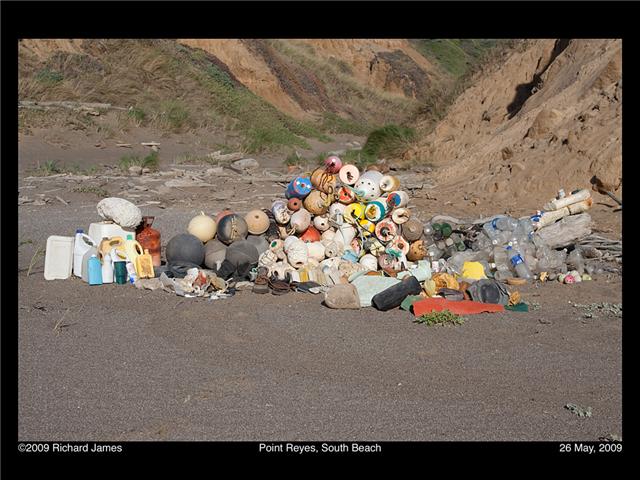
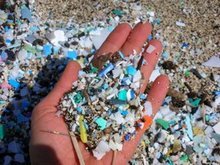
Whether we see the debris littering our shore, or peer at jars full of plastic confetti recovered in ocean trawls, the invasion of plastics into our ecosystem is inescapable.
While we are all struck by Algalita’s initial 1999 finding of a 6:1 ratio of plastics to zooplankton in the North Pacific Gyre (cited even as recently as Moore’s 2008 paper in Environmental Research), Anna & Marcus pointed out that zooplankton concentrations vary widely by season and time of day. A more reliable benchmark, they said, is the concentration of plastic particles per unit of surface area. In 1999, they found .002 gm/m2. In 2008, the concentration had doubled to .004 gm.
They reported on their visit to Kamilo Beach in Hawaii, where the plastic trash can go up to your knees. And this was three months after the beach had been cleaned of all litter. Scooping into the beach at the high tide line, they found more plastic particles than sand.
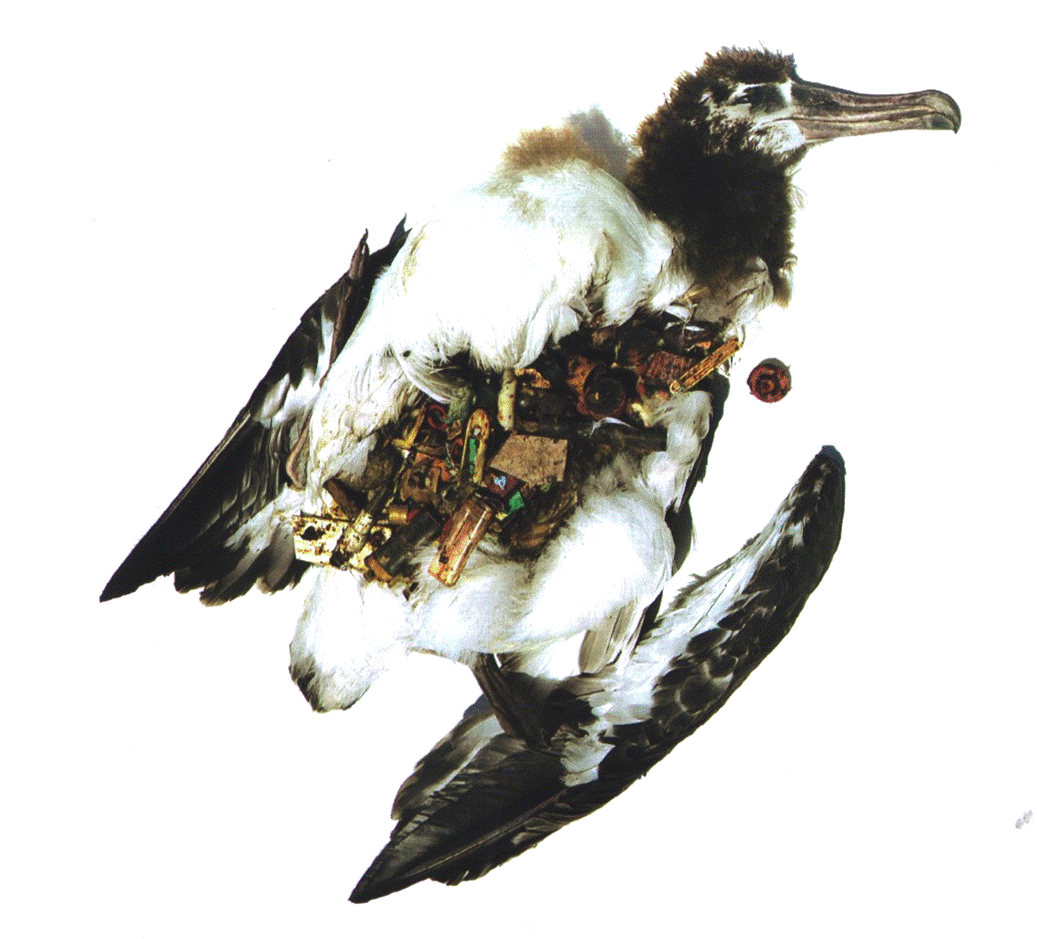
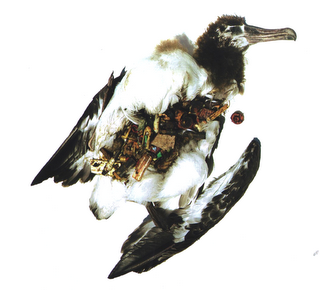
They spoke also of Midway Island, about the size of a college campus. They found hundreds of Laysan albatross carcasses with plastic pouring out of their abdomens. They cited the finding of Laist (1997) that 44% of the world’s seabirds species are susceptible to plastic ingestion or entanglement. In addition, 22 kinds of cetaceans, all marine turtles, and a growing list of fish are so affected.
They reminded us that 80% of ocean litter comes from the land. Even riding their bicycles through Oregon, considered one of the cleanest states, they could not travel more than 20 seconds before they saw another piece of roadside litter. (In the San Francisco Bay Area, the Regional Water Quality Control Board reports an average of 3 pieces of litter along every stream that feeds the Bay.) Whether we see the debris littering our shore, or peer at jars full of plastic confetti recovered in ocean trawls, the invasion of plastics into our ecosystem is inescapable. Amphipods, barnacles, benthic worms, jellyfish, salps, lugworms, and plankton have all been documented to ingest plastics in their surrounds.
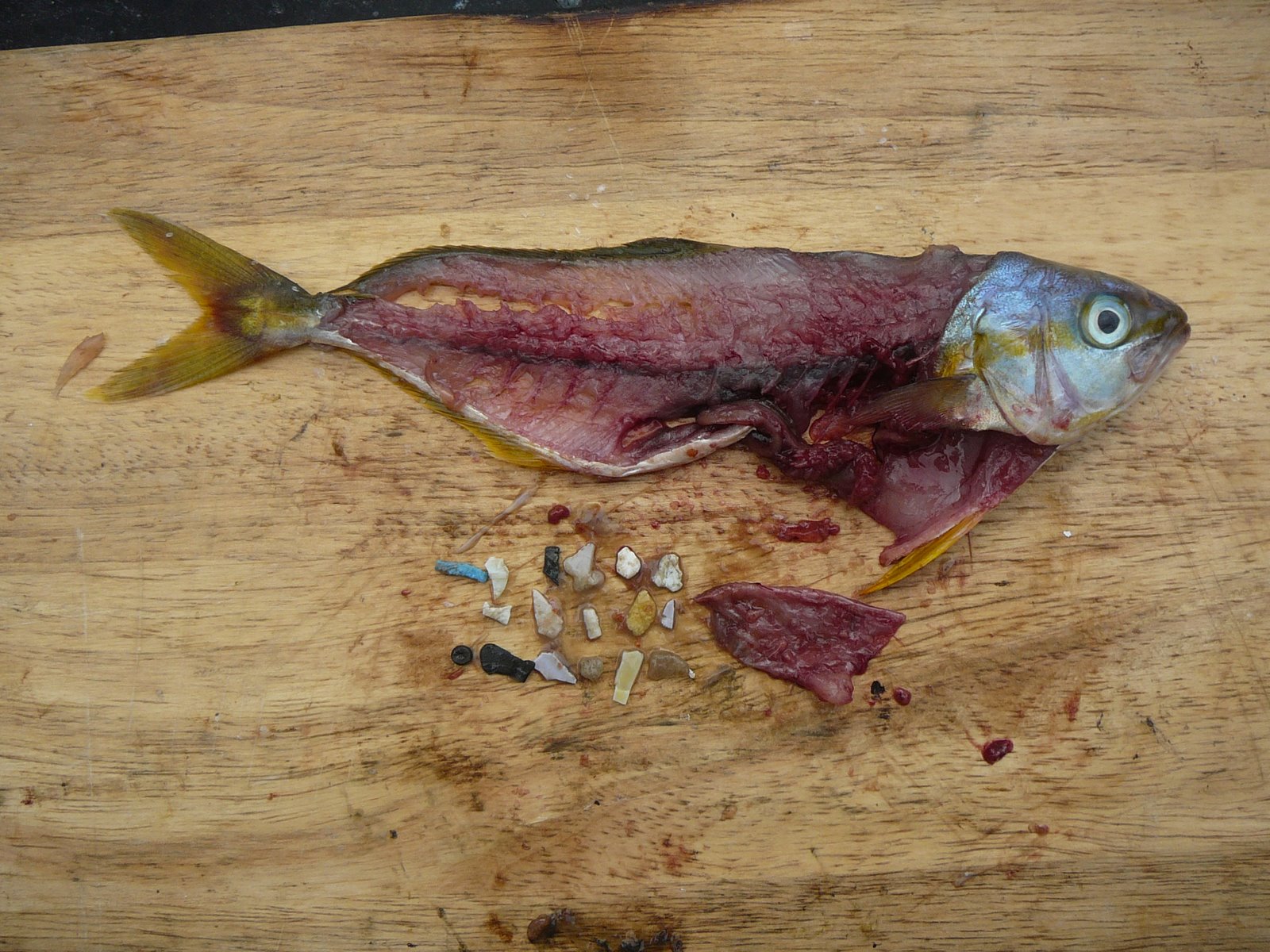
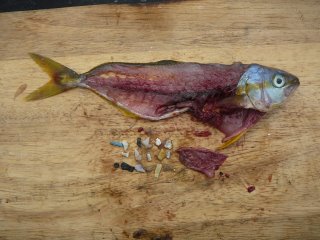
The rainbow runner is a particularly telling example. Marcus found this fish on many Hawaiian restaurant menus. One rainbow runner that he caught while sailing to Hawaii had 12 pieces of plastic in its flesh. From a total of 671 samples of prey fish on their journey, 37% had visible plastic particles in them. “Our fish,” said Marcus, “are eating our garbage.” (And these are just the visible particles. A 2004 study of a market in Singapore found BPA, a building block of polycarbonate and a major endocrine disrupter, present in every sample of seafood.)
What can we do about this spreading plague of synthetic, non-biodegradable, often-toxic material? Recycling has been at the top of many people’s lists. Anna and Marcus, though, said that it should be at the bottom when it comes to plastic. Here’s why:
1. Recovery is inefficient.
2. Markets for recycled plastic are limited.
3. Plastics are easily contaminated by foodstuffs and other materials; types of resins are also easily confused in the high-speed sorting of materials at recycling centers.
4. Low melting points of plastics means that they must be washed instead of burned clean.
5. Down-cycling is the best that we can get out of plastics recovery.
Instead, they described a 3-point plan:
1) Ban throw-away design.
2) Require EPR for all durable goods.
3) Create an economic incentive for retrieval of all plastics loose in the environment, perhaps 25 cents per pound.
We might add to this list: 4) Institute the Precautionary Principle as a screen for all new chemical and manufacturing products and processes. Include a retroactive recovery and replacement program for all synthetics already on the market with proven endocrine-disrupting effect. This program would be paid for by fines on companies that produced these synthetics.
Many of us have already begun the process of change, diminishing our purchase of items made of, or wrapped in, plastic. We have spoken to friends and family, even encouraged and instituted zero-waste practices at office parties and school events. Others have hosted presentations on Rethinking Plastics. Others are tabling at Marin Farmers’ Markets to inform fellow customers about healthy alternatives to plastic. Some of us have written letters to legislators and spoken at public hearings.
What comes next? More education, more outreach, more advocacy. Here’s a sampling of opportunities:
EDUCATION
* Come to a screening of Addicted to Plastic, an entertaining and informative film, on Thursday, Sept 10, at the Rheem Theatre in Moraga. The event opens at 6 pm with wine and cheese tasting; the film starts at 7 pm.
* Join Cathy Rosekrans’ team of volunteers at the Civic Center Farmers’ Market the third Sunday of every month, where we educate customers on healthy alternatives to plastic; or come to the Oakland and Hayward markets on Saturdays. Contact Cathy at katerine2@earthlink.net.
OUTREACH
* Think of one business that is selling unnecessary plastic (e.g., plastic water bottles) and talk with us about how to inspire them to change.
* Contact us for names of businesses that we’ve already identified as good candidates to hear this message.
* Think of one wasteful plastic product (e.g., the new plastic labels on organic produce, or plastic net bags around cantaloupes), and brainstorm a campaign to replace this item with something clean and green. (In many cases, that replacement means nothing — a Zen option!)
ADVOCACY
* Write letters to legislators on bills pending in Sacramento this year: EPR (Extended Producer Responsibility), plastic bag fees, and a styrofoam ban. These have all been moved to the “two-year calendar,” meaning that they have been postponed for consideration till Jan 2010. It’s not too early to start reminding our legislators that we need this action.
* Speak to your city council about banning styrofoam and all throw-away petro-plastics such as straws, cups, and lids.
Green Sangha will be sending updates on opportunities periodically, but please let us know if you have ideas of your own or need support for follow-through. We will be offering the Rethinking Plastics training in September and October in Berkeley, preparing volunteers for speaking, for tabling at markets and other venues, for outreach to businesses, and for civic advocacy. We start Thursday, Sept 24. Each class goes from 7 to 9 pm. RSVP if you would like to participate!
In the meanwhile, know that many inspired activists are taking on the Herculean task of re-imagining our world, from one dominated by empire to one constructed of community. Join us as we build that community through meditation, education and support, and awakened action.
Stuart Moody
Rethinking Plastics Campaign Director
All Pt. Reyes beach litter photos on this post (first picture, and all below): Copyright Richard James, May 2009.

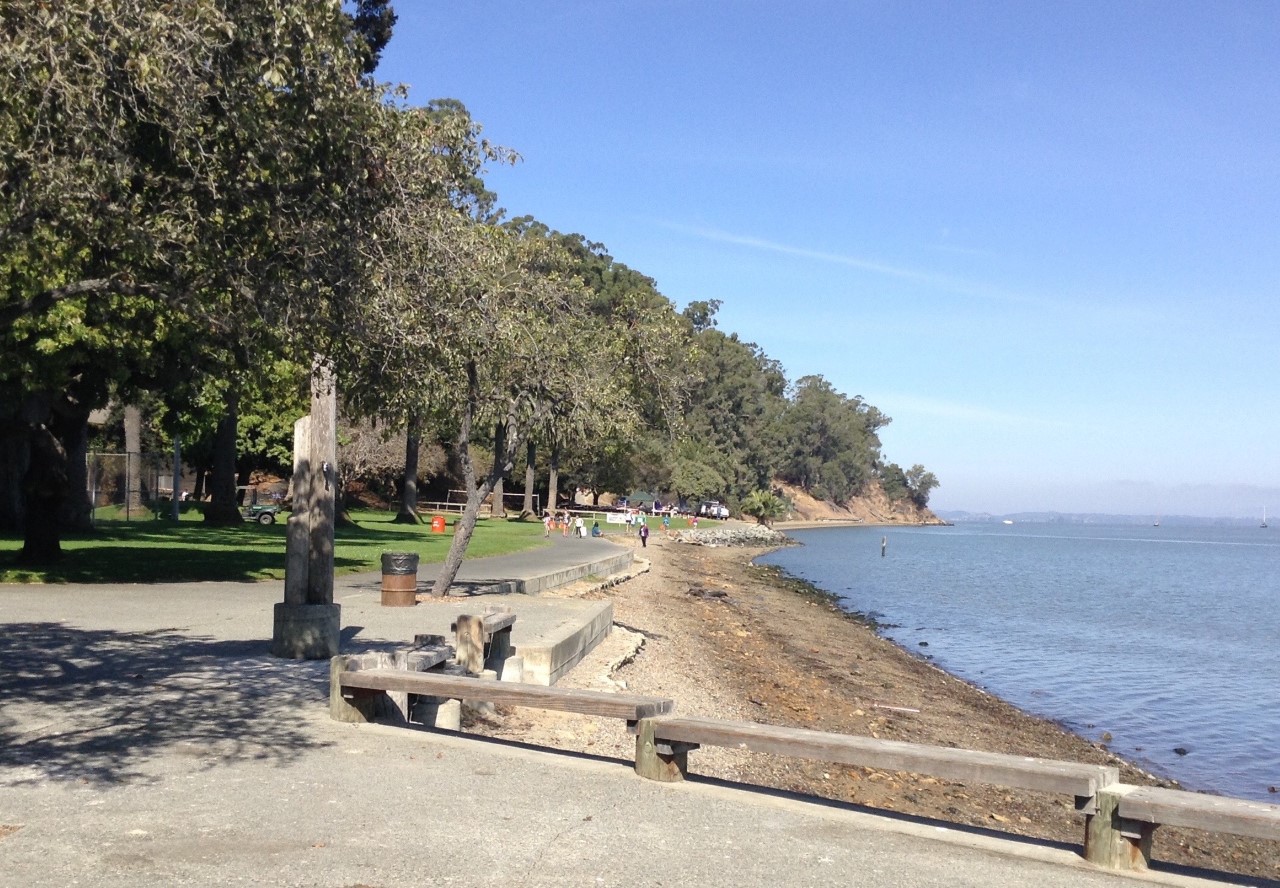
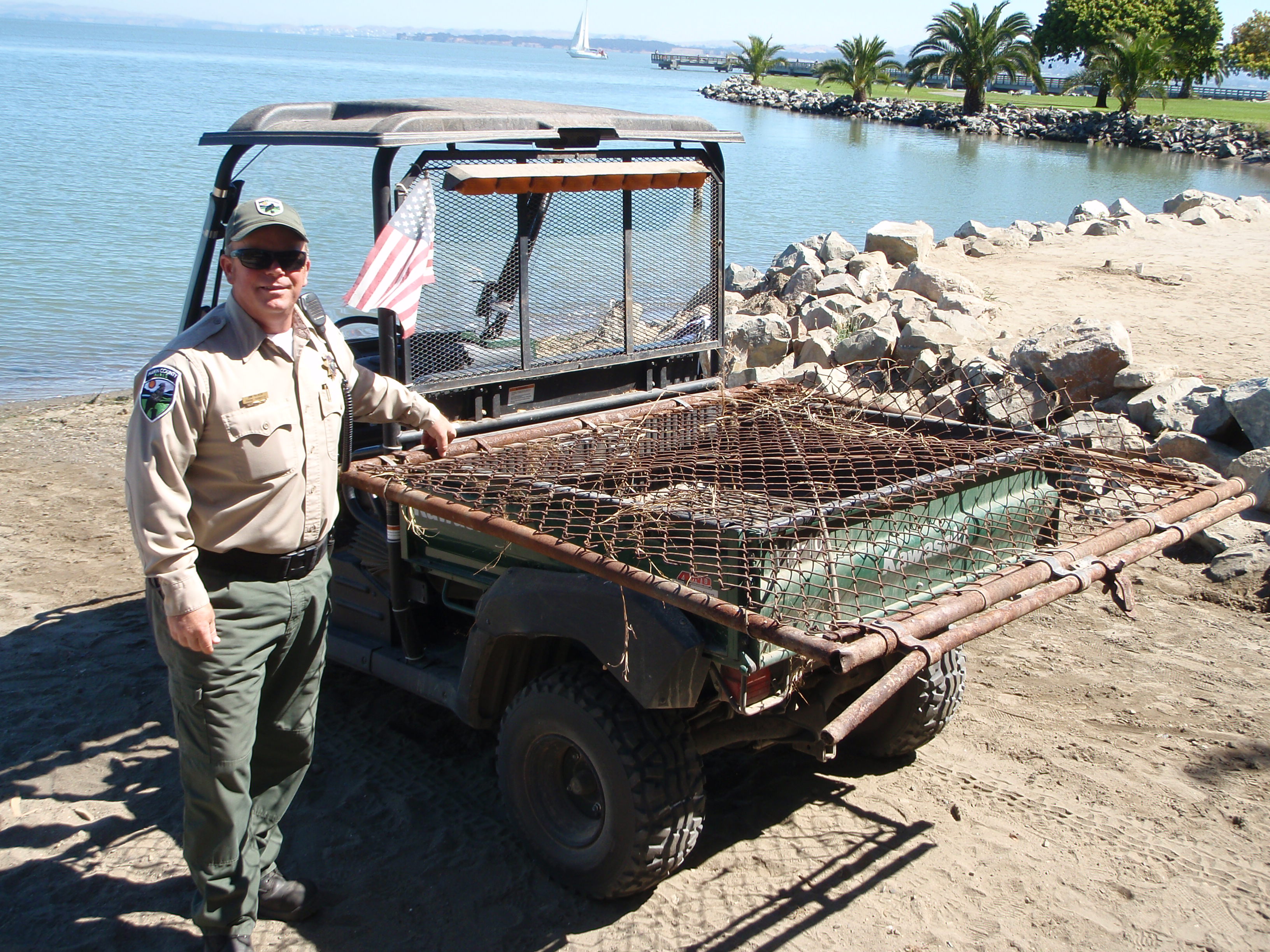
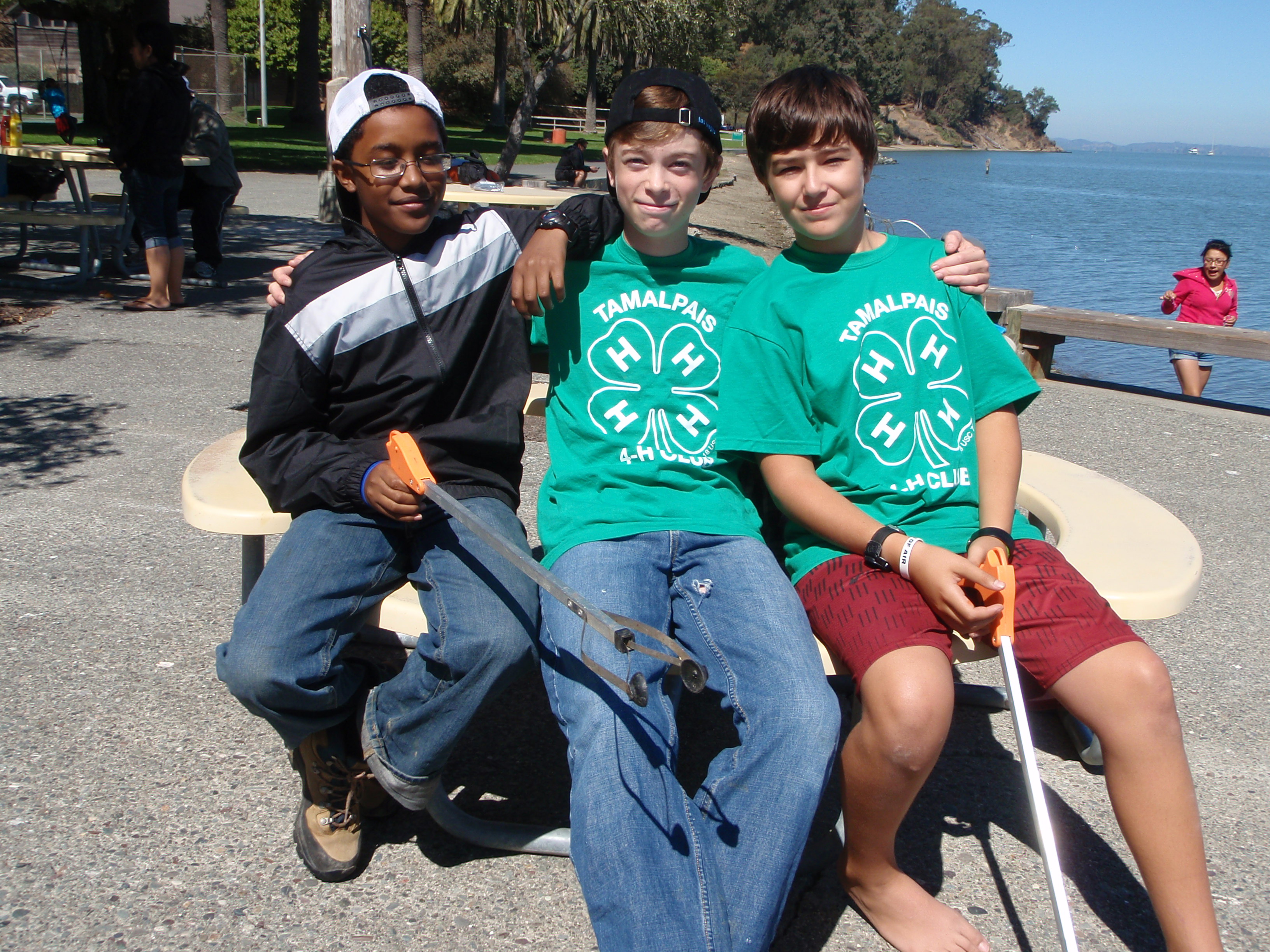
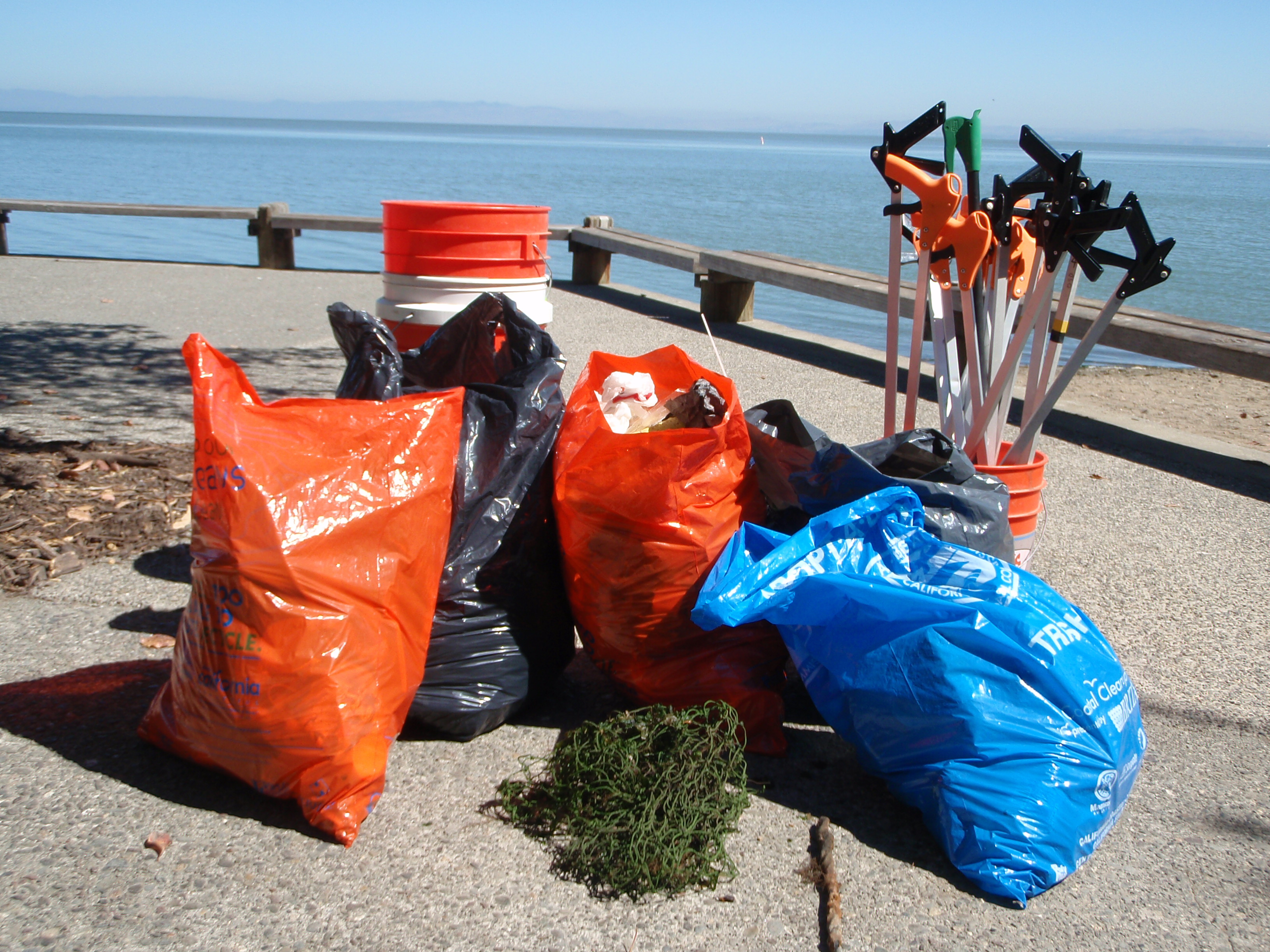
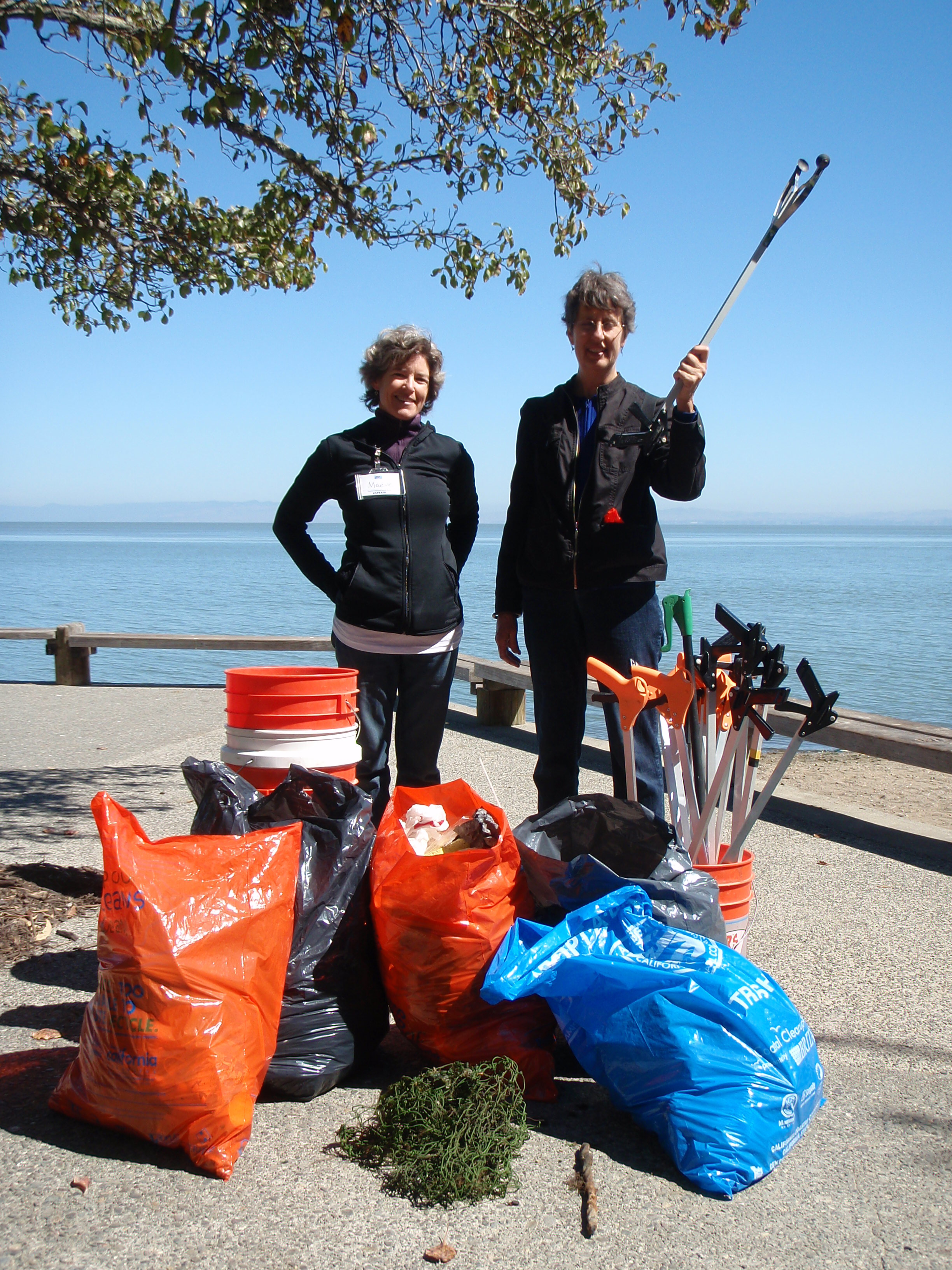
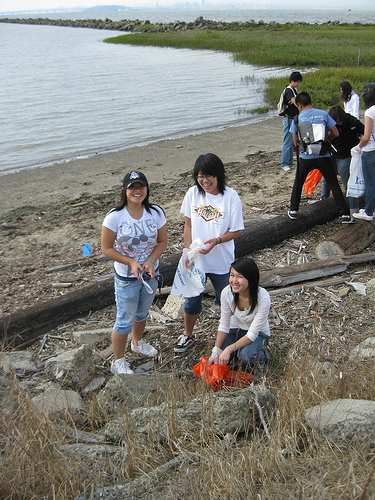
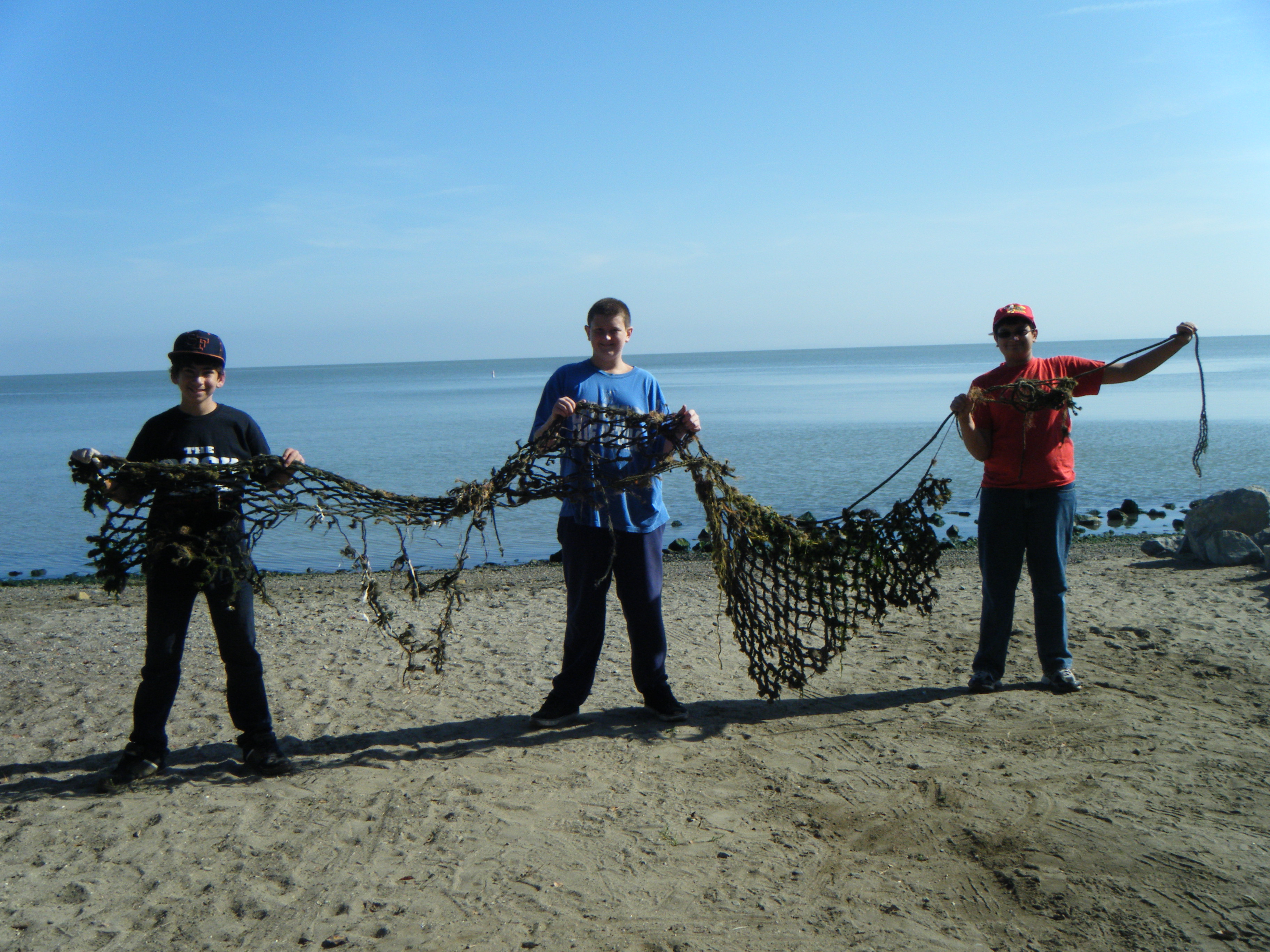
 We had a strong turnout for the 31st annual Coastal Cleanup Day. Our 20 keen volunteers, just about the right number for this smallish site, were part of the biggest litter cleanup event in the whole world: 65,000 strong last year in California alone. Park rangers Kevin, Sara, and Justin greeted us warmly and helped us out by providing plenty of buckets and litter pickers.
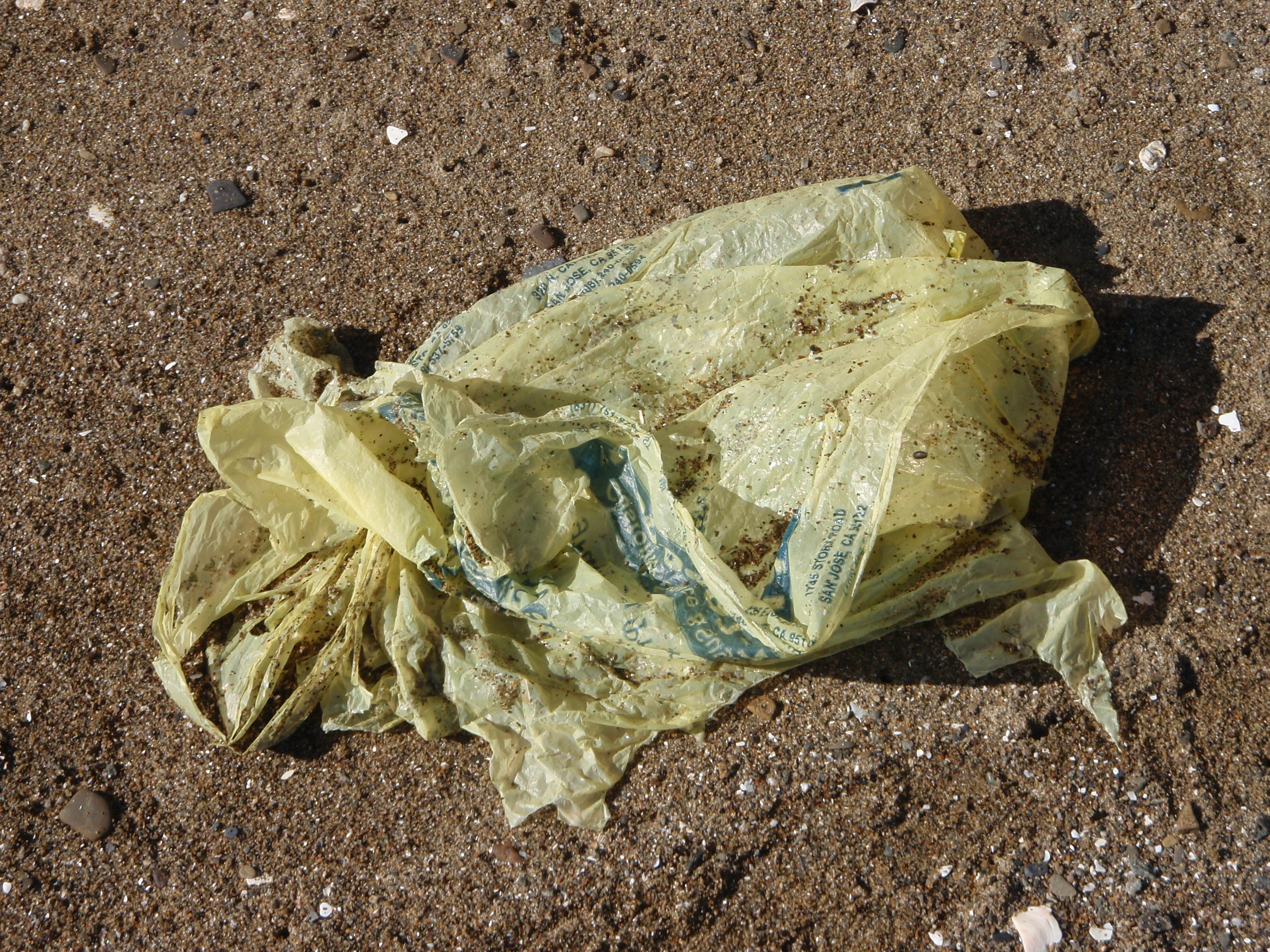 One Girl Scout mom, who has taken part in cleanups at McNear’s for years, reported far fewer discarded plastic bags than she ever used to, surely proof that the various bans and actions by the County, business, and advocacy groups such as Green Sangha are having a significant effect. Later, reviewing our data cards, I noticed far fewer polystyrene bits recorded than in years past. Could this especially problematic form of plastic also be slowly on its way out?
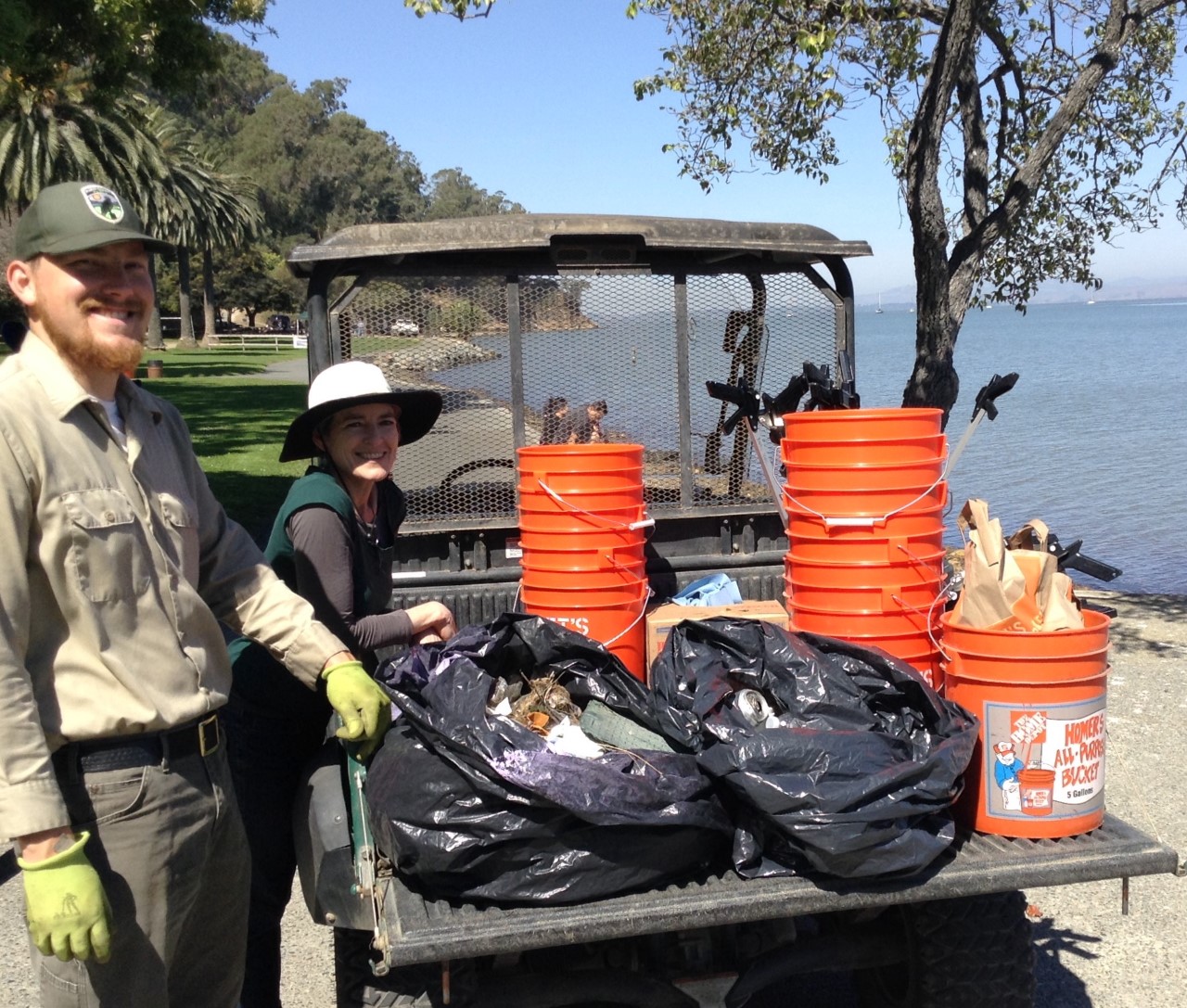 McNear’s beach is pretty well cared for by the rangers, but it’s an ongoing job to keep on top of the litter and they report that “there’s always more,” whether blown in by wind, dropped by picnickers, or washed ashore by tidal currents. So they were grateful for the extra help today. One item they’d love to see far less of is those plastic drinking-straw wrappers that come with juice cartons. Hmm . . . an item for future ban efforts?