
On August 29, 2014, the California Legislature passed SB 270, the single-use bag ordinance. Gov. Jerry Brown followed through in September and signed the bill into law. “I think,” said Gov. Brown, “on balance, this will protect the environment—because we have far too much waste and throughput—but at the same time we’re doing it in a very standard way that will not disrupt business in California.”
A day later, though, the plastics industry initiated a referendum to challenge the ban, putting it on hold until Election Day, November 8, 2016. On that day, voters put an end to shopping-bag litter by voting YES on PROP 67, and NO on PROP 65.
Our many colleagues in the Clean Seas Coalition advocated across the state on behalf of this issue. For example, NRDC put together a clear summary of the issues, and facts on the substantial benefits that municipal bag bans have already conferred on the landscape: Say good-bye to the plastic shopping bag.
We celebrated when Jerry Brown signed SB 270, and we celebrated on November 9, when the outcome of the vote was known. In our hearts, we sang along with the chorus in this rap video produced by Ben Zolno of New Message Media:
Don’t forget foam foodware, another harmful single-use plastic. In 2012, San Rafael passed a foam food-ware ban, and so have 77 other municipalities in California. But we have work to do still! You can help by taking a letter to your favorite food server or your office’s party planner, urging them to go green and leave polystyrene behind. Here’s our letter to food purveyors.
Consequences of Convenience
We’re addicted to plastic, especially plastic bags.
If you are like 95% of US shoppers, whenever you purchase anything, it ends up in a plastic bag. In the grocery store, most of us put our vegetables and fruits as well as bulk items into single-use plastic produce bags, and all those bags end up in a single-use plastic check-out bag.
Shoppers worldwide are using 500 billion to one trillion single-use plastic bags per year.
This translates to about a million bags every minute across the globe, or 150 bags a year for every person on earth. And the number is rising.
“But plastic bags are so convenient!”
 It depends on how far you are looking. A plastic bag may be convenient for a minute or two when you carry something out of the store, but consider these costs:
- Plastic bags are made from a non-renewable resource: oil!
An estimated 3 million barrels of oil are required to produce the 19 billion plastic bags used annually in California. - Greenhouse gas emissions
Plastic manufacturing’s air pollution contributes to “global weirding” (extreme weather of all sorts). - Non-biodegradable
Plastic is food for no one. It never completely breaks down. - Litter
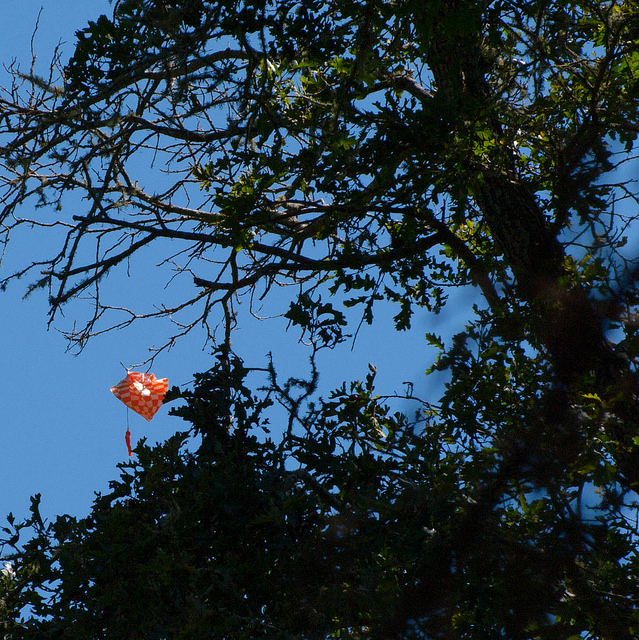
We see bags hanging on trees, along the roadside, slipping down the storm drain, and floating in the ocean. Even when we do put them in the garbage, they don’t always make it to the landfill. 47% of landfill blow-away trash is plastic. - Toxicity
Manufacturing plastic releases toxins in the air, as does recycling plastic. The additives used in plastic are often toxic and can leach into our food. The surface of plastic is chemically attractive to some of the worst toxins in our environment (e.g., PCBs and pesticide metabolites). - Harm to Marine Life
An estimated 100,000 marine mammals and turtles, one million seabirds, and countless fish worldwide are killed by plastic rubbish each year. - Choking the ocean
Beaches on every continent are littered with plastic scraps and particles. In a 2008 surface trawl of the North Pacific Gyre, 46 pounds of plastic were found for every pound of zooplankton. - We’re eating plastic
Fine particles of plastic are taken in by filter-feeders in the ocean. These plastic-laden creatures are then eaten by larger animals and plastics work their way up the food chain, all the way to our seafood menu.
Green Sangha’s Work
Since 2006, our actions have included:
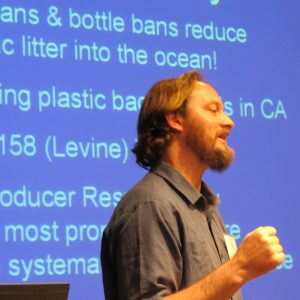 Giving over 280 presentations to over 8500 citizens
- Co-leading a successful campaign to ban plastic check-out bags in Fairfax, California
- Catalyzing zero-waste lunch policies at schools and non-profit centers
- Inspiring Bay Area markets to give up plastic produce bags, reducing that form of waste by 8 tons a year
- Publishing articles in newspapers and magazines
- Showing our plastics display in scores of festivals, conferences, and other public gatherings
- Testifying before elected councils and boards
- Collaborating with electeds, grocers, and non-profits in the BYOBag Marin campaign, leading to bag, bottle, and foam food-ware reduction
What You Can Do
- Be the Change
- Take your reusable bags wherever you shop; if you forget it, go get it!
- Visit MyPlasticfreeLife.com to see how Beth Terry has reduced her plastic footprint creatively, and with good humor, too.
- Learn about Ban the Bag Movements & Legislation in your area.
- Learn more about Green Sangha’s Rethinking Plastics Campaign.
- Share
- Our rap video, Plastic State of Mind (http://bit.ly/plasticstateofmind)
- This page on Facebook or other networks
- Join the Campaign. Sign up for our Email Newsletter to read about current actions and starting one in your community.
- Support Our Work. Donate to help us spread the word and produce more videos, raising awareness and catalyzing real change.
Working Together
Tell us your ideas and wishes for your locality, and we can multiply our results. We can speed the “Great Turning” away from the model of industrial waste and pollution, and instead move toward sustainable communities.
Plastic State of Mind Credits
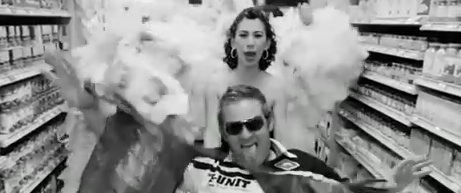
Ben Zolno of New Message Media – Writer/Lyricist/Director/Bag Boy/Editor
Glenn Sauber – Shopper
AshEl Eldridge – Rapper
Jenni Perez – Singer
Bex Kanengiser – Cashier
Many Green Sangha volunteers – Shoppers
Amy English – Production Coordinator, AD
David Nakabayashi – DP
Harrison Pierce – Consultant, Animatic, AC
Bo Cox – Camera Op
Working Music Track – Colin Menzies
Final Music Track and Mastering – Amurai
…and thank you to all the wonderful volunteers!
Sponsored by
Good Earth Natural and Organic Grocery
To-Go Ware
Chico Bag
People Towels
Pingback: Plastic State of Mind: Parody With Purpose – EcoLocalizer
Pingback: Plastic State of Mind: Parody With Purpose – EcoLocalizer
Pingback: Plastic State of Mind: Parody with Purpose
Pingback: Fantastic AntiPlastic Classic « Climate Denial Crock of the Week
Pingback: Plastic State of Mind [VIDEO] – Planetsave.com: climate change and environmental news
Pingback: Rethinking Plastics Campaign at Green Sangha: Inspiring Awakened Action « Sistastarbird’s Blog
Pingback: Plastic State of Mind | inkydeep
I work for a plastics company. The beauty of plastic is its versatility and reusability. Given the current cost of this raw material, it is a precious resource that communities can collect and resell to help support community activities, like recycling aluminum. For example, in most cases plastic that is of the thermoplastic variety can be remelted, reshaped and recreated 5-10 times – so it’s like a cat with nine lives. We choose to throw things away. What we need to establish are efficient reclaiming centers that return money back to the community. Secondly, if you want companies to change packaging, next time you shop, take off the packaging and leave it in the store – this will send the right message to the producers of the product to be more earth friendly.
Hi Raj,
Thanks for this posting. It’s a good opportunity to share with you a misconception of what is necessary now, in these times. It is not, as may be thought, a time for seeing how much we can get from a product and it’s “nine lives”, but a time for reflection. It is now the time where we consider all we have done to damage our environment with our constant need for more and more. I would ask that you reconsider your orientation of thought here. Consider the damage all the plastic that is not reused and most of it is not, what it does to babies, sea life, our hormones, etc.
I agree, it is that we choose not to recycle and it is a huge problem. But, it really is the problem of creating the substance in the first place. There are appropriate uses of plastic, namely medical uses, but not for the general public to consume by way of chemicals.
Your idea to leave the packaging behind is a good one. I will try and do that.
Thank you.
Please stop producing plastic bags, let’s save our enviroment please!
This music video’s effective and promises a far reaching educational outreach impact. It’s smart, easy, fun, heck it’s a popular recognized tune, (note: many people remember the song they learned their alphabet with “Now I know my ABC’s”), taps into broader audience and is probably what will come to mind the next time when asked “paper or plastic?”. It has more “brain stickiness to accelerate behavior change” than merely thinking “oops, forgot to bring my own bags again….oh well maybe next time”. Thank you for this.
Thanks for such a fun video!
HEMP PLASTIC is substituting bioplastic alternatives to petro chemicals in injection moulding processes.
Pingback: Debate Your Plate – Plastic bag rap goes viral
Good choice of music.
Thanks for inspiring us to be leave a smaller carbon footprint.
We were inspired to be a better community.
I absolutely love this video! It’s release coincided with my resolve for the year 2011: No New Plastic in my home for the entire year. I’ve learned so much already! Just try going into any store, especially food shopping, and fill your cart with only plastic free items – a big wake up. I had not noticed how pervasive plastic has become in our society. Now I am more determined than ever to break the nasty plastic habit! Thanks again for such an important, timely, and musical reminder 🙂
Pingback: What’s the big deal about plastic bags?
Pingback: San Francisco’s First Green Film Festival Is Here! « A Project Called Life
Pingback: Oakland: Videos That Went Viral in 2011 « Oakland Local
Pingback: Plastic State of Mind | Creative Resistance
its really pleasure to see people against plastic, but i hope that those who are against do not use!!
Pingback: FakePlasticFish.com Shows It Really Is Possible to Live Almost Plastic-Free - Big Green Purse