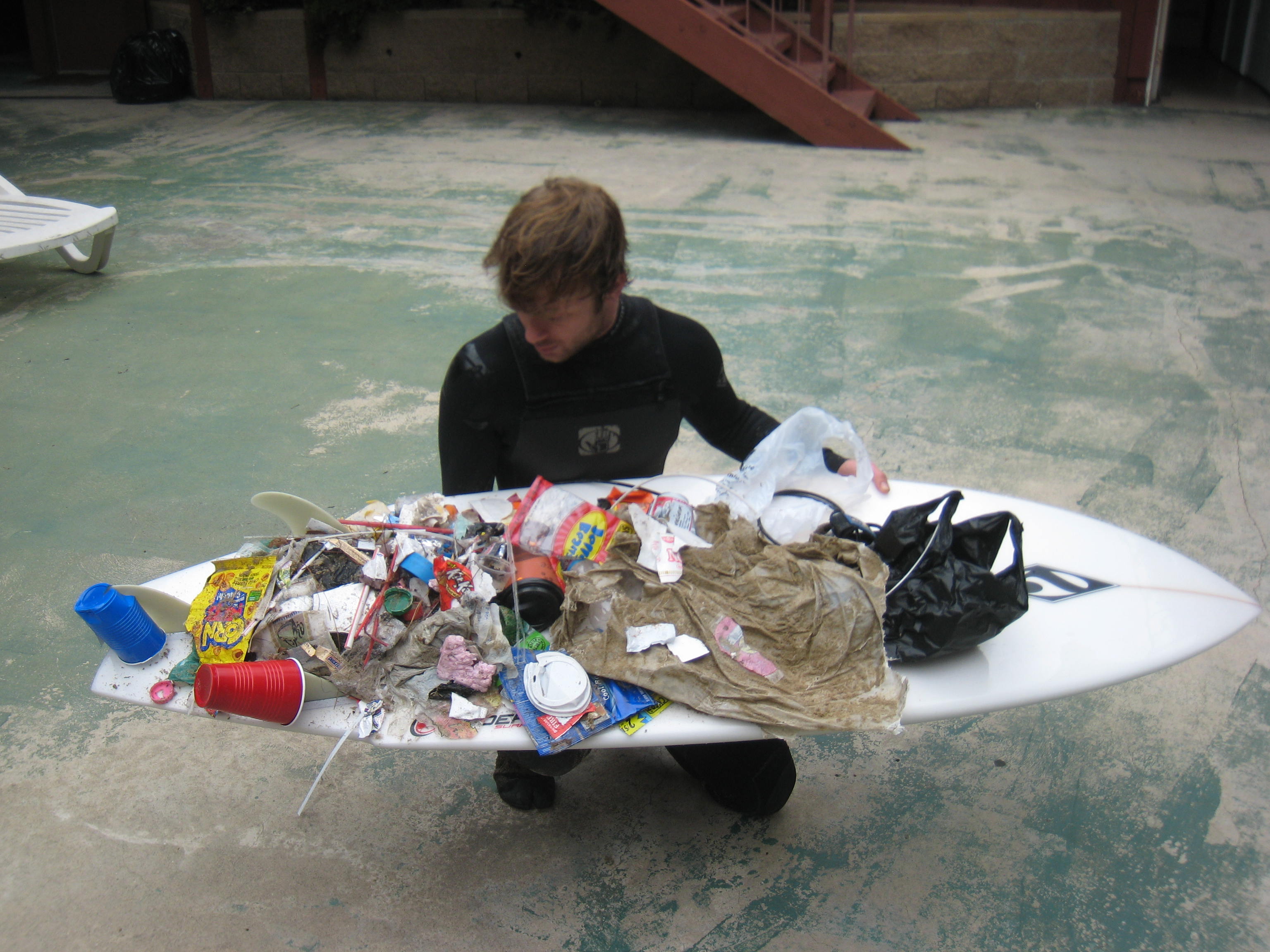
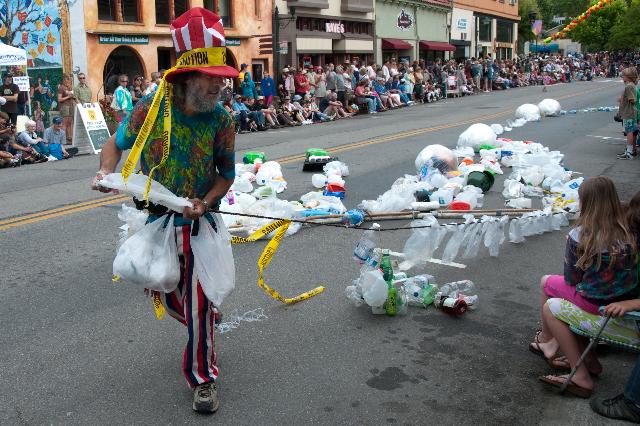
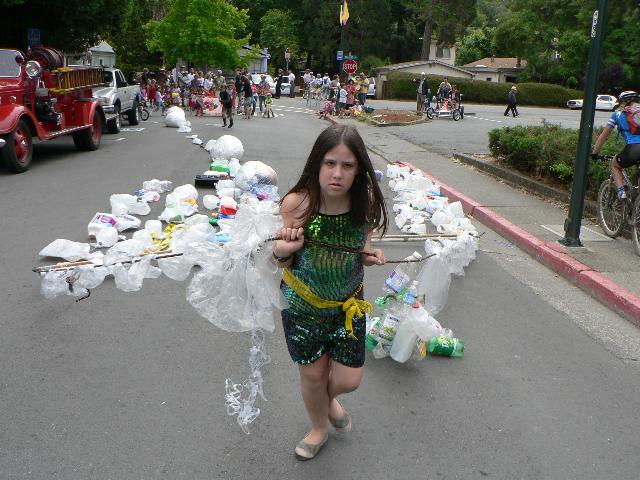
This morning I got an e-mail from Dan Jacobson, Legislative Director of Environment California. Dan’s group helped raise a public outcry when the Governor wanted to close all our State parks for budgetary purposes. His group also published an important report on Toxic Baby Bottles, showing that five major brands of plastic baby bottle leached the neurotoxin BPA into infants’ milk.

Dr. Mercola shares this picture of a baby with a polycarbonate bottle. The WHO recommends breastfeeding of babies for the first two years of life. Do we need to be using so many bottles?
So, when Dan asked for my input on a survey, how could I refuse? My response is below. You can respond, too: http://www.environmentcalifornia.org/action/oceans/member-survey?id4=ES.
One of the real heroes of waste reduction these days is Beth Terry (
www.fakeplasticfish.com). You can see what Beth is doing every day to reduce her trash footprint by watching her 5-minute
video on her 2009 plastic trash (total under 4 pounds).
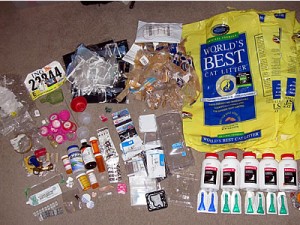
Beth says, "my new collected plastic for the year comes in at 3.7 pounds," about 2% of the average American's trash.
Here’s the survey from Environment California, and my replies:
What are some everyday things you do to cut your use of plastic and other trash that might end up in the Pacific?
I eschew plastic at every opportunity! I never buy any beverage, oil, cosmetic, or herbal product in a plastic container. (Plastic lids, however, have become impossible to avoid, even on some glass jars.)
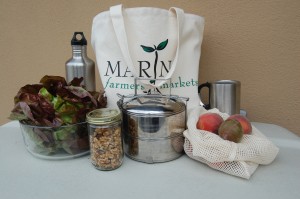
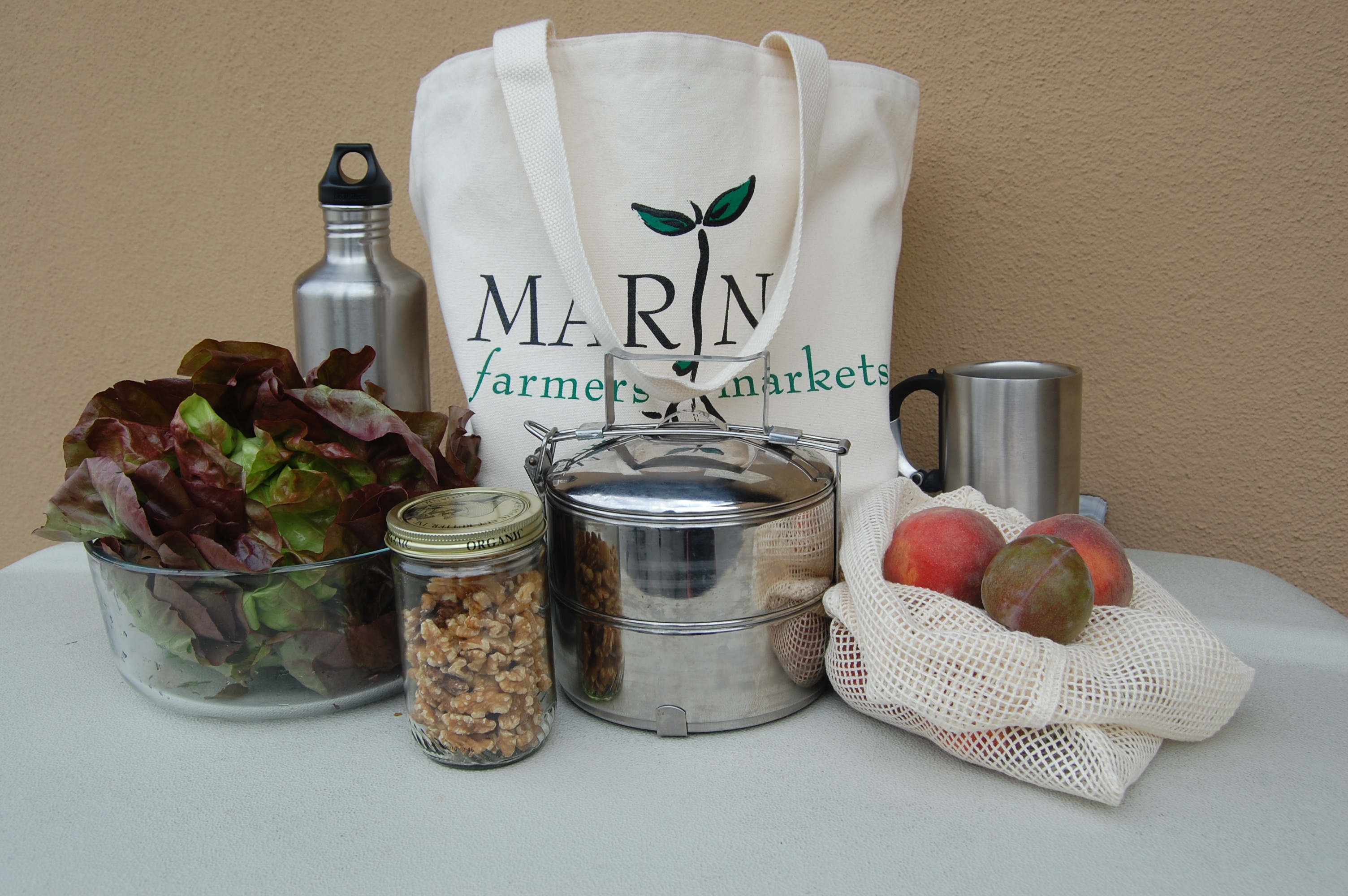
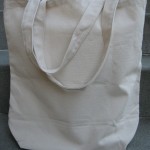
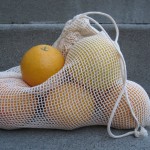
My friends at Marin Farmers' Markets are really into reusable container of all sorts!
I buy milk in glass bottles, bread in paper bags (yummy artisan bread), grains in bulk. I make my own yogurt, too — much easier than I ever imagined.
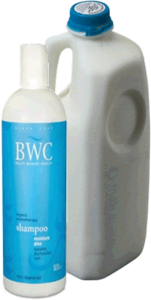 I never use bottles like these!
What are the most interesting and creative things you do to cut waste?
I tally the number of times that we take the trash bin to the curb for pick-up each month. On a good month, we’re at one pick-up or less.
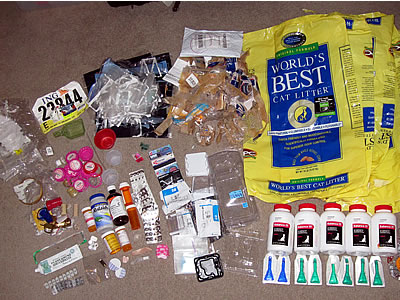
Today I’m starting Beth Terry’s plastic challenge — capturing every piece of plastic that I am about to throw away or recycle, and keeping it in a bin (I’ll wash food-stained pieces before storing!). At the end of 12 months, I’ll make a tally and weigh it all.
What are some common barriers you’ve experienced to maintaining a small trash footprint?
Packaging is the number one item: styrofoam cushioning in boxes, hard plastic casing around small office purchases, plastic bags around newspapers even when it’s not raining; non-recyclable, non-compostable milk cartons.
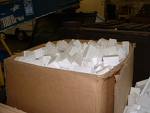
- All this junk. Ugh!
The second issue is the difficulty in repairing or recycling items that break or malfunction. For example: flashlights, mugs, school binders, tools.
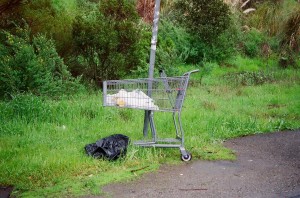
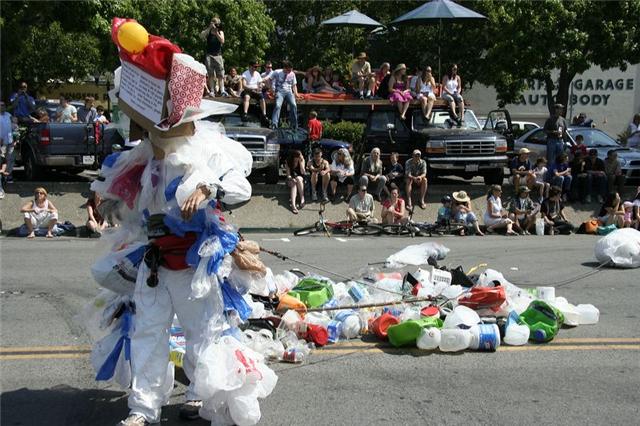
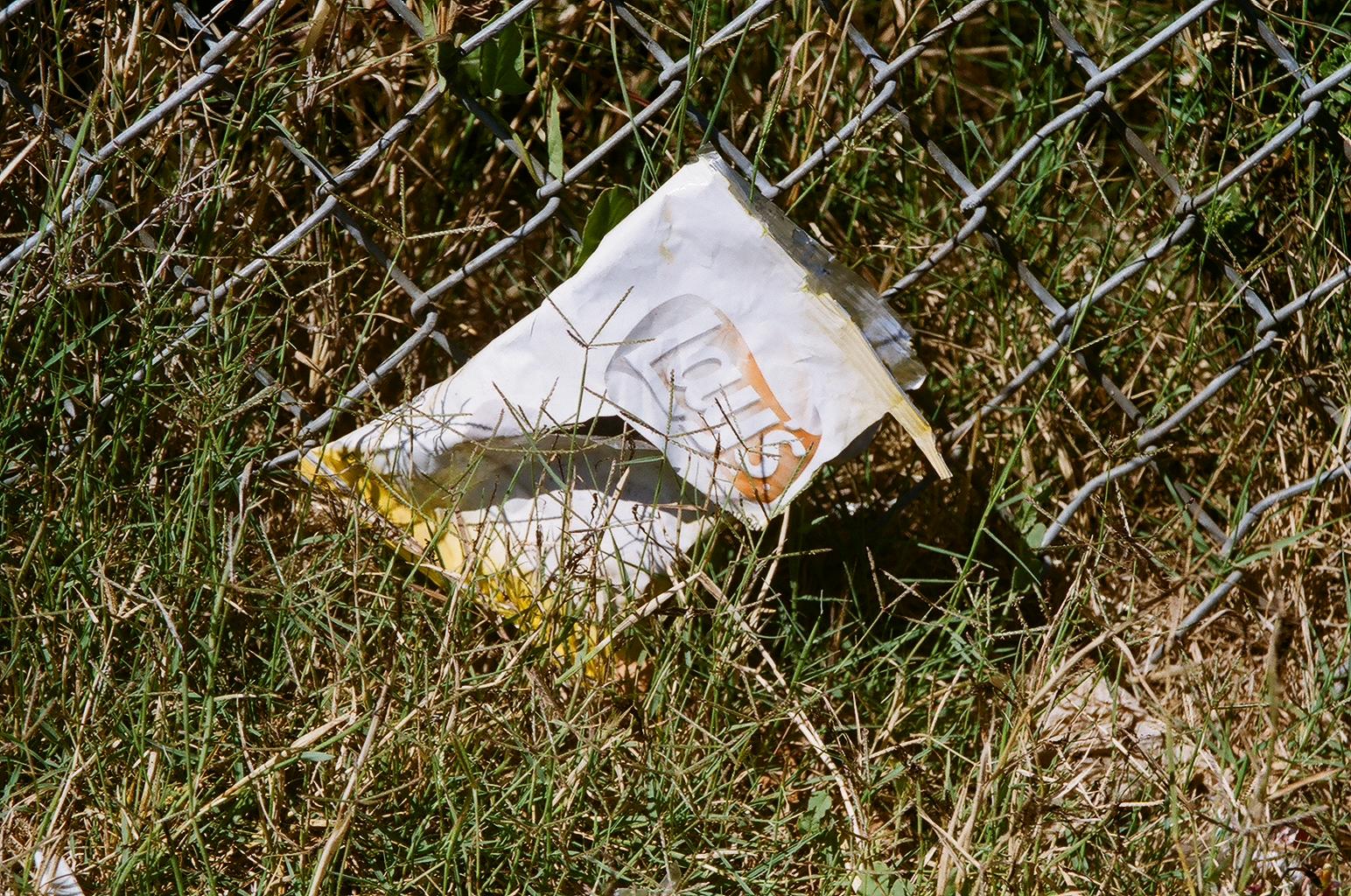
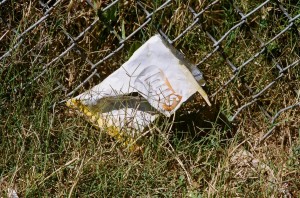
What are some ways you help reduce trash at your work, school, church or community center? I have always tried to leave little trash behind. After a month taking care of a friend’s house in 1996, I had only one small paper bag of garbage to put on the curb (I put it in my neighbor’s garbage can instead). In 2004 I joined Green Sangha, a group dedicated to helping individuals live more consciously and harmoniously. The next year, I co-founded Green Sangha’s Rethinking Plastics campaign. We have given over 200 talks in the community, educated business owners and employees, consulted with schools on waste reduction, and advocated for civic change. We helped pass the plastic bag ban in Fairfax, and are collaborating with EcoMom Alliance, iReuse.com, Teens Turning Green, and the County of Marin on the BYOBag Marin campaign. I’m also working with our local middle school, Davidson in San Rafael, on an End to Litter. Too often, we see things like this bag lying on the ground:
 What information would make it easier for you and the groups you are part of to cut waste? An itemized list or chart of the costs of throw-away items, in terms of energy expenditure, materials wasted, extraction (mining, logging, drilling), and toxicity, along with the less measurable dimension of non-biodegradability. Then, a comparison to reusable items of various sorts (sustainable vs. synthetic, for example).

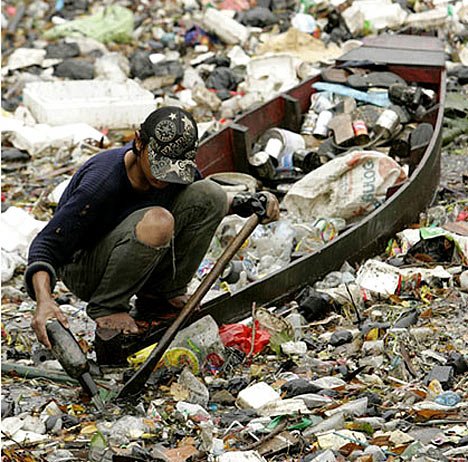
 From styrofoam cups to artificial organs, plastics are perhaps the most ubiquitous and versatile material ever invented. No invention in the past 100 years has had more influence and presence than synthetics. But such progress has had a cost.